By Chiagoziem Abosi
Edited by Bababunmi Agbebi
For years, Nigerians heard the same question whenever petrol subsidy came up:
How much was the government spending on it?
Now, the Federal Government says the removal of the subsidy and the resulting reforms mobilised ₦15.8 trillion in resources for the Federation between June 2023 and December 2025.
But before we celebrate or debate that number, there is something important to understand.
₦15.8 trillion does not mean the government received one ₦15.8 trillion payment labelled “subsidy savings.”
Finance Minister and Coordinating Minister of the Economy, Taiwo Oyedele, made that clarification while explaining the government’s finances. He said the savings became part of the resources available to the Federation rather than appearing as a separate credit with “subsidy savings” written on it.
According to Oyedele, of the ₦15.8 trillion in resources mobilised through subsidy savings, ₦5.4 trillion went to the Federal Government, while ₦10.4 trillion was shared among state and local governments through the Federation Account.
In simple terms, removing the subsidy reduced the amount of money the government had been using to keep petrol prices artificially lower.
That money then became part of the resources available to the different levels of government.
But there is another important part of the story.
Nigeria also borrowed more money
The ₦15.8 trillion was not the only additional resource discussed.
Oyedele said the Federal Government generated ₦3.1 trillion in incremental independent revenue during the period.
It also borrowed an additional ₦11.9 trillion between June 2023 and December 2025.
Together, those sources brought the Federal Government’s incremental resources during the period to ₦20.4 trillion.
But the government’s spending was even higher.
Oyedele said total incremental expenditure reached ₦30.64 trillion during the same period.
So, the ₦15.8 trillion figure should not be interpreted as Nigeria suddenly having ₦15.8 trillion in spare cash.
It is part of a much bigger financial picture.
Why did Nigerians feel the subsidy removal so quickly?
This is where the policy became personal.
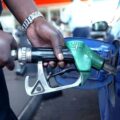
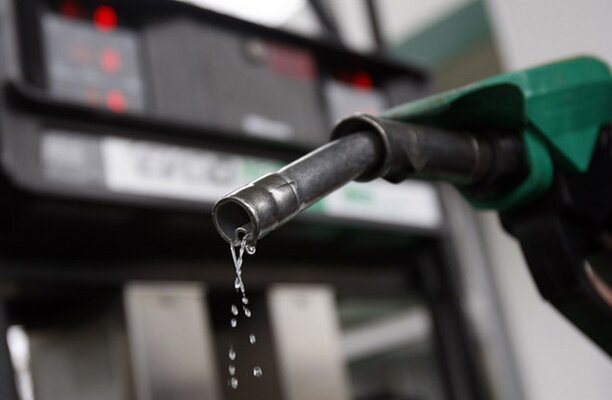
When President Bola Tinubu announced the removal of the petrol subsidy in May 2023, petrol prices rose sharply.
And because petrol affects transportation, logistics and production, the effects spread beyond the filling station.
Transport fares increased.
Businesses faced higher operating costs.
Moving food and other goods became more expensive.
Households also had to spend more to get around.
While the government says the reform reduced pressure on public finances and generated additional resources, Nigerians have also experienced the immediate cost of that policy through higher living and business expenses.
So, did Nigeria actually save ₦15.8tn?
According to the Federal Government, yes but the wording matters.
The ₦15.8 trillion represents resources mobilised from subsidy savings between June 2023 and December 2025.
It is not a separate ₦15.8 trillion sitting untouched somewhere.
And that distinction matters because the bigger question is no longer simply “How much did Nigeria save?”
It is:
“What did Nigerians get in return for the sacrifice?”
That is where the debate around the petrol subsidy removal becomes much more complicated.
The government says the reform created fiscal space and helped redirect resources.
For ordinary Nigerians, the real measure will ultimately be whether those resources translate into better services, stronger infrastructure, more jobs, lower economic pressure and a better quality of life.
And that is a conversation worth having.