By Suad Ayinla
Edited by Bababunmi Agbebi
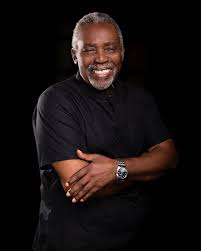
What does it take for an actor to become a permanent part of a country’s cultural memory? For Olu Jacobs, it was a career built across theatre, television and film, and a presence that audiences could recognise even before he spoke. For more than five decades, Jacobs was one of the most familiar faces in Nigerian entertainment, playing king, father, businessman, professionals and men of authority while helping shape the acting tradition that would grow alongside Nollywood.
Born Oludotun Baiyewu Jacobs on July 11, 1942, Jacobs grew up in Kano, where his interest in performance began early. He participated in drama and debating at school, while watching the travelling theatre performances of Hubert Ogunde further strengthened his fascination with acting. That interest eventually took him to Britain, where he trained at the Royal Academy of Dramatic Art in London. His professional career abroad included stage work, British television and international film productions before he returned to Nigeria. Lufodo’s official biography records a career spanning about 50 years and more than 300 Nigerian films, alongside work with organisations including the BBC, the Royal Shakespeare Company and the National Theatre.
Returning home brought Jacobs into a Nigerian entertainment industry that was changing rapidly. He became one of the actors who helped establish professional acting as a major force in Nigerian television and film. His deep voice, controlled delivery and commanding screen presence made him particularly effective in roles that demanded authority, but his career was not restricted to one type of character. He moved between serious drama, traditional roles and commercial films, becoming familiar to audiences across different generations.
His contribution also extended beyond performing. Together with his wife, actress Joke Silva, Jacobs built the Lufodo Group and the Lufodo Academy of Performing Arts. The work reflected a wider interest in developing Nigeria’s creative industry and giving aspiring performers professional training. Lufodo identifies Jacobs as a co-founder and records his work as an actor, writer, stage director and producer.
Jacobs’ career continued through several generations of Nigerian entertainment. He witnessed the transition from television drama to the rapid expansion of Nollywood and remained one of the actors whose names carried recognition across those eras. His partnership with Joke Silva became equally significant, combining marriage, acting, production and arts education. Together, they created a professional legacy that went beyond the films and stage productions in which they appeared.
His contribution was recognised with several honours, including the African Movie Academy Award for Best Actor in a Leading Role and the national honour of Member of the Order of the Federal Republic. But awards tell only part of the story. For many Nigerians, Jacobs’ impact was experienced through years of watching him on television and in films, often playing characters whose authority seemed inseparable from the actor himself.
After decades in front of the camera, Jacobs’ public appearances became less frequent. Yet his name remained firmly embedded in Nigerian popular culture. His 84th birthday on July 11, 2026, marked another milestone in the life of an actor whose career had already become part of the country’s entertainment history.
On September 16, 2026, Olu Jacobs died at the age of 84. His family announced his passing, describing him as “The Lion of Lufodo” and giving his dates as July 11, 1942 to September 16, 2026. The family also asked the public and media to respect their privacy during the period of mourning.
With his death, Nigeria has lost one of the actors who helped connect different eras of its entertainment story. From a young boy discovering theatre in Kano, to professional training in London, to decades spent on Nigerian stages and screens, Jacobs built a career that crossed borders and generations.
The curtain has now fallen on Olu Jacobs’ life, but not on the stories he helped create. His performances remain, the performers he influenced continue to work, and the generations who watched him still carry memories of the characters he brought to life.
For an actor who spent his life telling other people’s stories, perhaps the most fitting ending is that his own story has become part of Nigeria’s.
Recommended posts:
 National Theatre Cannot Become a Playground for the Privileged
 ‘Acting Is What I Am Here To Do, What I Am Alive For’ – Padita Agu | Nollywood Actress And Social Media Content Creator Expresses Her Love For Acting
 Amaechi Muonagor: Biography, career, reasons he stopped acting
 Top Ten Movie Producers in 2022