By Bababunmi Agbebi
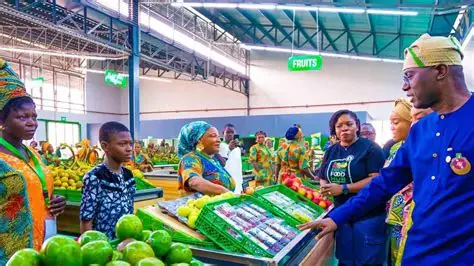
Lagos State is taking another step towards reshaping the way food is produced, transported, stored and sold across the state with the commissioning of a new Mid-Level Agro-Produce Hub in Agege.
Governor Babajide Sanwo-Olu commissioned the facility at Pen Cinema, Agege, describing the project as part of his administration’s efforts to bring modern food infrastructure closer to the communities where Lagos residents buy and consume food.
The Agege facility is the latest addition to Lagos’ growing network of structured food hubs. It follows the Fresh Food Hub at Idi-Oro, Mushin, which was commissioned in December 2023, and the Mid-Level Agro-Produce Hub at Abijo, which was commissioned virtually in April 2026.
For Lagos residents, the significance of the new hub goes beyond having another place to buy food.
The state government’s food hub strategy is designed to address some of the weaknesses that have long affected Lagos’ food supply chain, including inefficient distribution, post-harvest losses, poor produce handling and the lack of organised markets connecting farmers with consumers.
The Mushin Fresh Food Hub, for example, had recorded more than ₦3.8 billion in transactions by May 2026, with more than 850 vendors registered and over 7,000 direct and indirect jobs linked to the initiative.
The objective is therefore not simply to construct modern markets. It is to build an interconnected food system where farmers, aggregators, traders, transporters, processors and consumers can operate within a more organised value chain.
For residents, a more efficient system could eventually translate into better availability of fresh produce, reduced wastage and potentially more stable food prices. However, the hubs alone cannot guarantee cheaper food; transportation costs, farm-gate prices, inflation and broader market conditions will continue to influence what consumers ultimately pay.
Agege is strategically important because of its dense population and its connection to several neighbouring communities.
Placing a modern agro-produce hub in the area means food distribution infrastructure is being brought closer to a major residential and commercial population rather than concentrating such facilities in only a few locations.
It also creates a more structured environment for traders and food businesses while potentially improving how produce moves from suppliers to consumers.
This approach is consistent with the Lagos State Government’s broader plan to develop structured food-distribution infrastructure across Local Government Areas and Local Council Development Areas in the state.
For residents of Ikeja and its surrounding communities, another development is particularly significant: construction is already ongoing on an agro-produce hub in Opebi.
The Lagos State Government previously disclosed that work was ongoing on hubs in Opebi, Ikorodu and Bombata, with additional locations identified in Apapa, Festac and the Lekki axis.
The planned Opebi facility could be particularly important for Ikeja because of the area’s position as one of Lagos’ major business and residential centres.
Ikeja residents frequently depend on markets and food outlets spread across different parts of the metropolis. A structured agro-produce hub closer to Ikeja axis could provide an additional channel for accessing fresh food while serving restaurants, caterers, retailers and other food businesses operating within the area.
If properly implemented and efficiently managed, the Opebi hub could bring several benefits.
First, convenience. Residents and businesses could have easier access to a structured source of fresh agricultural produce without always having to travel to distant wholesale markets.
Second, better food distribution. Bringing aggregation and trading closer to consumers could shorten parts of the supply chain and improve the movement of produce within the Ikeja axis.
Third, opportunities for businesses. The hub could create opportunities for traders, food vendors, logistics operators, retailers, processors and other small businesses within the food economy.
Fourth, reduced food wastage. Better organised handling and distribution can help reduce the amount of agricultural produce lost between the farm and the final consumer, an important issue in a city that relies heavily on food supplied from outside its borders.
And finally, it could contribute to Lagos’ larger ambition of developing a modern food economy that is supported not only by farming, but also by logistics, storage, processing, technology and organised markets.
The commissioning of the Agege hub therefore represents more than the opening of a new market. It is another piece of a larger attempt to redesign how food moves through Lagos.
For Ikeja residents, the next important milestone will be the completion and commissioning of the Opebi hub.
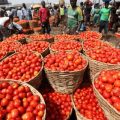
If the model delivers on its promise, Ikeja could gain more than another place to buy tomatoes, vegetables, fruits and other produce. It could become another important link in a more organised food network, one designed to bring the farm, the market and ultimately the consumer closer together.