

By Bababunmi Agbebi
There are some friendships you watch from the beginning and quietly tell yourself, “This one will not end well.” Not because you are clairvoyant, but because sometimes the foundation already tells you what the future will look like.
That was, for me, the Diiadem and Dabota Lawson friendship.
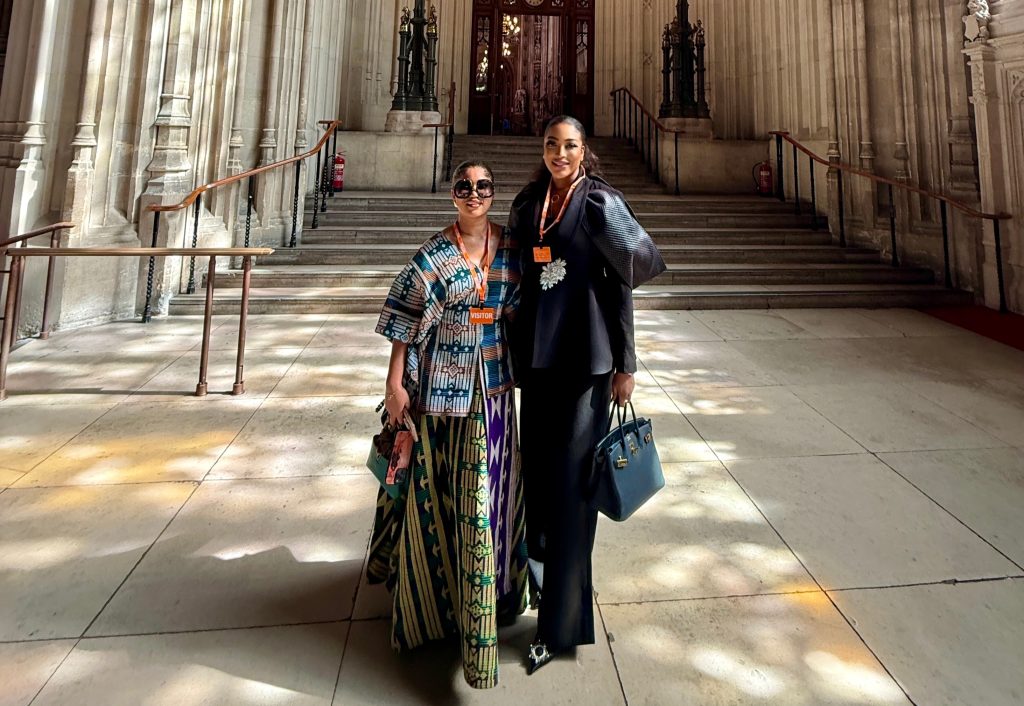
When the third season of The Real Housewives of Lagos introduced Diiadem and Dabota, their chemistry was almost immediate. They appeared to find common ground within a group already layered with tensions and old alliances.
But I remember watching that friendship and thinking: two people who bond strongly over a common enemy must be very careful about what happens when the enemy is no longer the subject of conversation.
Because friendship built primarily around shared dislike has an expiration date.
And here we are.
I do not know Diiadem personally. I do not know Dabota personally. I have no private information about either woman, and therefore, I am not interested in pretending to be the judge, jury and Supreme Court of a friendship I was never part of.
But as a spectator, there is something about this entire situation that bothers me deeply.
The moment friendship becomes a weapon; everybody has already lost.
What fascinates me even more is how quickly private conversations can become public ammunition once a friendship collapses. Suddenly, things that were whispered in confidence become screenshots, accusations, explanations and social-media content.
And this is precisely why I stand firmly on being a classist.
Yes, a classist.
Before anybody starts clutching their pearls, I am not talking about judging people based on their bank accounts, family names, schools attended or social status. I am talking about class as character, discretion, emotional intelligence and the ability to know when not to descend into the gutter.
Because money can buy a designer bag.
It cannot buy discretion.
A title can give you access.
It cannot give you class.
And a carefully curated Instagram page can scream luxury while the person behind it behaves like they have absolutely nothing to protect.
That, for me, is the real tragedy.
If you tell me something in confidence while we are friends, I should not suddenly become a walking press release when we fall out. I should not be sending your private conversations to blogs because we have had an argument. I should not be weaponising information you trusted me with simply because I am angry.
And you should not do it to me either.
That is class.
Friendship is not just about brunches, vacations, birthday cakes, matching outfits and calling one another “Sis or Bro.” Friendship is also knowing that there are certain things you will take to your grave.
There are things your friend should be able to tell you knowing that even if the friendship ends tomorrow, the information remains buried.
Because if I have to wonder whether the person sitting beside me at dinner will send our WhatsApp conversation to a blog the moment, we disagree, then darling, we were never friends.
We were simply collaborators in proximity.
And this is where the Diiadem-Dabota saga becomes bigger than two women fighting.
It becomes a lesson in how we choose friends.
I have always believed that you should pay attention to how people speak about the people they used to love. Because one day, you may become one of those people.
If your new friend spends all her time telling you the private business of her former friend, please understand that you are not necessarily receiving exclusive access.
You may simply be getting a preview.
And this is why the beginning matters.
When Diiadem and Dabota formed their alliance on the show, there was already an existing dynamic involving other women. Diiadem was questioned during the season about siding with Dabota, while the show itself eventually documented tensions between the women and the breakdown of several relationships.
So, when the friendship eventually imploded, I was not shocked.
I was simply watching the inevitable become public.
But then we enter another uncomfortable territory: the allegations being thrown around.
At some point, the conversation reportedly moved into deeply personal territory, including claims about a relationship with a married man.
And I have to ask: who in God’s sane mind confirms or casually puts something like that into writing?
Was Diiadem possessed when she typed that message?
Because some things, even when you are angry, should remain unsaid.
Not necessarily because they are untrue or true, but because you cannot control where words go once you release them.
Screenshots do not have emotions.
Blogs do not have friendships.
The internet does not have loyalty.
And once something leaves your phone, you have lost control of it.
This is why emotional intelligence is so important.
You can be angry and still be strategic.
You can be betrayed and still be dignified.
You can know the whole story and still choose silence.
That is not weakness. That is class.
I also refuse to sit here and declare one woman completely innocent and the other completely guilty. I was not there. I do not know the full history. I do not know what happened behind closed doors.
But I can judge what is publicly displayed.
And what has been publicly displayed should remind all of us that not every friendship deserves access to every version of you.
There is a difference between having friends and having an audience.
Your friend does not need to know everything.
Your business partner does not need to know everything.
The person you travel with does not need to know everything.
And sometimes, the person calling you “my sis or my bro” needs to know considerably less than the person who has earned your trust over twenty years.
We have become too comfortable with instant intimacy.
You meet somebody, bond over one mutual dislike, exchange deep secrets, become inseparable, tell each other everything and within months you are calling yourselves sis and bro.
Then one disagreement happens and suddenly the internet receives a full documentary.
Please!
Let us bring back friendship with boundaries.
Let us bring back discretion.
Let us bring back the ability to fight privately.
Let us bring back the maturity to say, “I am angry, but I will not destroy you.”
Because there is a particular kind of elegance in knowing something devastating about somebody and choosing not to use it.
That is power.
Anyone can expose.
Anyone can screenshot.
Anyone can drag.
Anyone can type.
But restraint?
Restraint is luxury.
And perhaps that is the lesson I am taking from Diiadem and Dabota: may we never have friends who will sell our gist to blogs the moment we disagree.
May we never have friends who weaponise our vulnerability.
May we never have friends who mistake intimacy for unlimited access.
But, equally, may we never be that friend.
Because it goes both ways.
The same way we demand discretion from people, we must be people worthy of trust.
At the end of the day, friendship is not measured by how loudly you defend your friend when everyone is watching.
Sometimes, friendship is measured by what you refuse to reveal when nobody would stop you.
Class is knowing you could take someone to the gutter and deciding that your heels are too expensive for that journey.
And frankly, some friendships should have remained friendships not become evidence.