By Bababunmi Agbebi
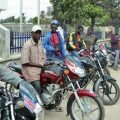
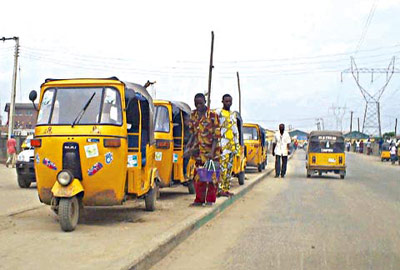
For many residents and commuters navigating Alausa, Ikeja, the sight of Keke Marwa operating on some roads but noticeably absent from House of Assembly Road raises an important question: is there a specific restriction preventing commercial tricycles from using the road, and if so, how is the restriction being enforced?
House of Assembly Road sits within one of Lagos’ most important administrative districts. It provides access to the Lagos State House of Assembly, government offices and other institutions within the Alausa Secretariat area. Because of the area’s official and administrative character, traffic management and security considerations can understandably be stricter than on ordinary residential or commercial roads.
However, the absence of Keke Marwa from the road should not automatically be interpreted as evidence of a newly introduced ban targeted specifically at that route. Lagos has a long-standing framework restricting motorcycles and tricycles from designated highways, bridges, major roads and certain local government areas. In 2020, the state government included Ikeja among six local government areas where commercial motorcycles and tricycles were prohibited, with the restriction taking effect on February 1 of that year.
The question, therefore, is not simply whether Keke Marwa is allowed to operate in Alausa, but what specific traffic regulation governs House of Assembly Road and whether the restriction is formally gazetted, signposted or enforced by traffic authorities.
Is House of Assembly Road Specifically Restricted?
There is evidence that Lagos has historically maintained restrictions covering Ikeja and several major routes within the metropolis. The state’s broader traffic regulations have also been used to prohibit motorcycles and tricycles from specific roads and locations.
What is less clear from publicly available information is whether House of Assembly Road itself has a separate, standalone Keke Marwa prohibition. That distinction matters.
A road can experience restricted commercial transport operations because it falls within a wider restricted area, because of security arrangements around government facilities, or because traffic authorities have designated it for particular traffic-management purposes. It would therefore be inaccurate to describe the absence of Keke on the road as a confirmed new ban without a specific directive from the Lagos State Government or relevant traffic authority.
That is precisely why the government should make the status of such roads clearer to the public.
Why Does Enforcement Appear Different for Keke and Okada?
This is where the issue becomes more interesting.
Lagos has demonstrated that it can enforce restrictions on commercial transport operators when enforcement is sustained and targeted. In recent months, for example, the Lagos State Taskforce has continued to impound motorcycles operating on restricted routes. In February 2026, the government reported the confiscation of 65 motorcycles in restricted areas, while another enforcement operation resulted in 70 motorcycles being impounded around Mile 2 and the Lagos-Badagry Expressway.
Yet the persistence of Okada on roads where they are prohibited suggests that enforcement remains inconsistent.
The problem is not necessarily the absence of laws. Lagos already has a substantial legal and regulatory framework. The challenge is consistent implementation across thousands of roads and multiple enforcement agencies.
Indeed, the difficulty is not new. Reports following the initial 2020 restrictions documented Okada riders continuing to operate on prohibited roads, including within the Alausa Secretariat area, despite signs indicating that motorcycles were not permitted.
That creates an uncomfortable contradiction: if the government can keep Keke Marwa away from a particular road through visible enforcement, why does the same level of consistency appear difficult to achieve with Okada on other restricted routes?
If Keke Marwa operators are successfully prevented from using House of Assembly Road, authorities could examine what makes enforcement there more effective.
Is there a permanent enforcement presence?
Are there physical barriers or controlled entry points?
Are operators adequately informed?
Is the road monitored more closely because of its proximity to government institutions?
Or is the restriction simply easier to enforce because the road has fewer access points?
These are practical questions worth answering.
The objective should not be to favour Keke over Okada, or vice versa. Both forms of commercial transport have played an important role in helping Lagos residents navigate the city’s difficult traffic conditions. But where government has imposed restrictions, those restrictions should apply consistently and transparently.
The debate around House of Assembly Road is ultimately part of a much bigger conversation about transport regulation in Lagos.
A restriction that is properly communicated and consistently enforced is easier for residents and operators to understand. A restriction that appears selective creates confusion and can encourage operators to test the limits of enforcement.
Lagos has repeatedly reaffirmed its restrictions on commercial motorcycles and tricycles, and enforcement agencies continue to carry out seizures and impoundments.
The next step should therefore be greater clarity.
If House of Assembly Road is officially restricted to Keke Marwa, residents deserve to know the regulation behind it. If it is part of a broader restriction covering Alausa or Ikeja, that should also be clearly communicated.
And if the government expects motorists, Okada riders and Keke operators to respect restrictions elsewhere in Lagos, enforcement must be consistent, visible and sustained, not occasional or selective.
For Lagos, the real test of a transport policy is not whether a ban can be announced. It is whether the government can enforce it fairly enough for the public to understand that the rule actually means what it says.