By Toochi Ejiofor
Edited by Bababummi Agbebi
It is easy for Nigerians to blame the government for almost every problem we face. In many cases, there are legitimate reasons to demand more from those responsible for public services. But as a people, we also need to examine the role our everyday actions play in some of the problems that affect our wellbeing.
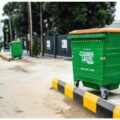
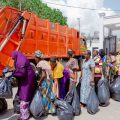
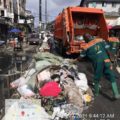
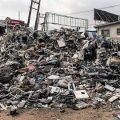
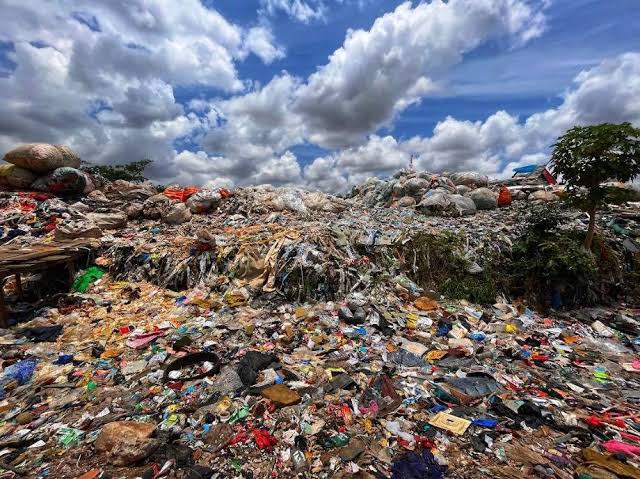
For decades, Lagos has battled a recurring waste management crisis. Streets are littered with refuse, bins overflow, drainage channels become clogged, and in many parts of the city, the smell of waste has become an unpleasant part of everyday life.
From the Olusosun dumpsite in Ojota to Mile 2, Mushin, Agege, Oshodi and even Ikeja, the pervasive stench is one of the most frustrating everyday realities of the waste crisis.
Recently, Governor Babajide Sanwo-Olu declared a state of emergency over the accumulating waste across the state.
Lagos generates over 13,000 tonnes of solid waste every day, placing enormous pressure on its waste management system as the population continues to grow. And while the government has made some efforts to tackle this crisis, the state desperately needs to work on an effective waste management system that can keep up with the amount of waste generated across the state.
We are part of the problem too
Many of us are guilty of contributing to the same problem we complain about. Take something as ordinary as eating boiled groundnuts on a bus. A passenger finishes eating, and casually throws the shells onto the road. It may seem insignificant because it is only a handful of groundnut shells. But multiply that behaviour by thousands of people every day, and the result is a city covered in litter.
There have also been instances of people taking advantage of heavy rainfall to empty their waste bins, allowing the water to carry the rubbish away. The waste may disappear from their immediate surroundings, but it has simply been moved somewhere else, potentially into a drainage channel in another neighbourhood or a waterway.
We must remember that when waste is not properly gathered and managed, it poses significant challenges for communities across the city. Discarded plastics and household refuse frequently block neighbourhood roadside gutters and primary drainage channels, contributing to flooding during rainy periods. The resulting standing water creates ideal breeding conditions for mosquitoes, which drives up the spread of malaria, cholera and dengue fever.
In areas where regular waste collection services are absent, open burning of refuse is commonly practised. This unsafe disposal method releases toxic air emissions that directly harm people, and vulnerable groups such as children and pregnant women.
We must understand that our everyday habits play a role in battling this crisis. We cannot demand cleaner streets while continuing to throw waste onto those same streets. We cannot complain about blocked gutters while using them as convenient dumping points.
Waste should not be thrown on the streets, in open spaces or into drainage channels. A small act of throwing a nylon or plastic bottle into a gutter can contribute to blocked drains. Make a habit of keeping your waste until you find an appropriate place to dispose of it.
You can also reduce the amount of waste by reusing items where possible and separating recyclable materials such as plastic bottles, cans and cardboard from other household waste. Additionally, we should also work together to keep our communities clean through clean-up exercises and by encouraging others to dispose of their waste responsibly.
Ultimately, tackling Lagos’ waste crisis requires both systemic action and individual responsibility. The average Lagosian may not be able to redesign the state’s waste management system, but we can influence what happens within our homes, streets and communities. Proper disposal, waste reduction and recycling can contribute to a cleaner environment. When these individual actions are supported by effective government policies, reliable waste collection and adequate infrastructure, they can become part of a broader solution to Lagos’ waste management challenge.