By Chiagoziem Abosi
Edited by Bababunmi Agbebi
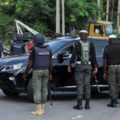
Nigeria’s efforts to strengthen policing have received a major financial boost after the Senate approved a combined ₦403.1 billion budget for the Nigeria Police Trust Fund.
The funding is expected to support the procurement of operational equipment, rehabilitation of police facilities, officer training, personnel welfare and other projects aimed at improving the capacity of the Nigeria Police Force to tackle insecurity across the country.
While the announcement is national in scope, residents of Ikeja may be asking a more practical question: Will this make communities safer?
According to the approved budget, the Police Trust Fund will channel resources into strengthening police operations through better equipment, improved infrastructure, training and retraining of officers, and enhanced logistics. Lawmakers said the investment is intended to improve the police’s ability to respond to crimes such as kidnapping, armed robbery, terrorism and other security threats.
For a commercial hub like Ikeja, where thousands of people live, work and run businesses daily, improved policing could have far-reaching benefits. Areas such as Computer Village, Allen Avenue, Alausa, Opebi and Ikeja GRA experience heavy human and vehicular traffic, making effective security essential for residents, commuters and business owners alike.
If properly implemented, increased funding could translate into better-equipped police stations, faster emergency response, improved patrol operations and more regular training for officers. Security experts have long argued that modern policing depends not only on manpower but also on technology, mobility and continuous professional development.
The Nigeria Police Trust Fund was established to provide additional funding for the police beyond the regular federal budget. The goal is to address long-standing challenges, including inadequate equipment, ageing infrastructure and operational gaps that have affected policing in many parts of the country.
However, some public policy analysts note that funding alone may not solve Nigeria’s security challenges. They argue that accountability, transparency in project implementation and efficient deployment of resources will determine whether communities experience real improvements in safety.
For residents of Ikeja, the success of the funding will ultimately be measured not by the size of the budget but by everyday realities: quicker police response, safer neighbourhoods, reduced crime and stronger public confidence in law enforcement.
As implementation begins, many Nigerians will be watching closely to see whether the investment leads to tangible improvements in policing and public safety.
Do you think increased funding is enough to improve policing in Nigeria, or should reforms focus just as much on accountability, technology and community engagement? Share your thoughts in the comments and follow IkejaBird Media for more stories that explain how national decisions affect lives in Ikeja.