By Toochi Ejiofor
Edited by Bababunmi Agbebi
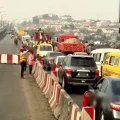
On April 8, many commuters were brought to a standstill by severe traffic gridlock caused by the President’s visit to commission the newly built Opebi-Ojota Link Bridge. Yet two weeks later, the bridge remains closed to the public.
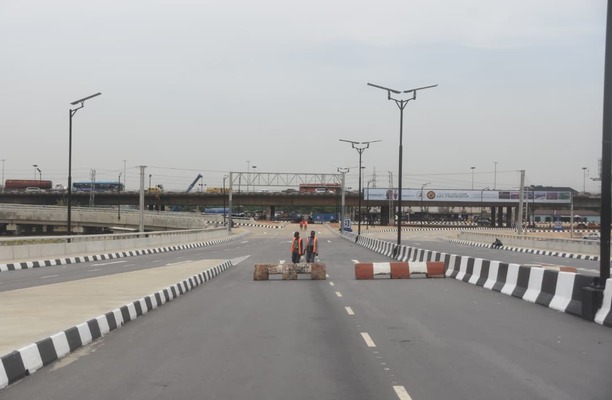
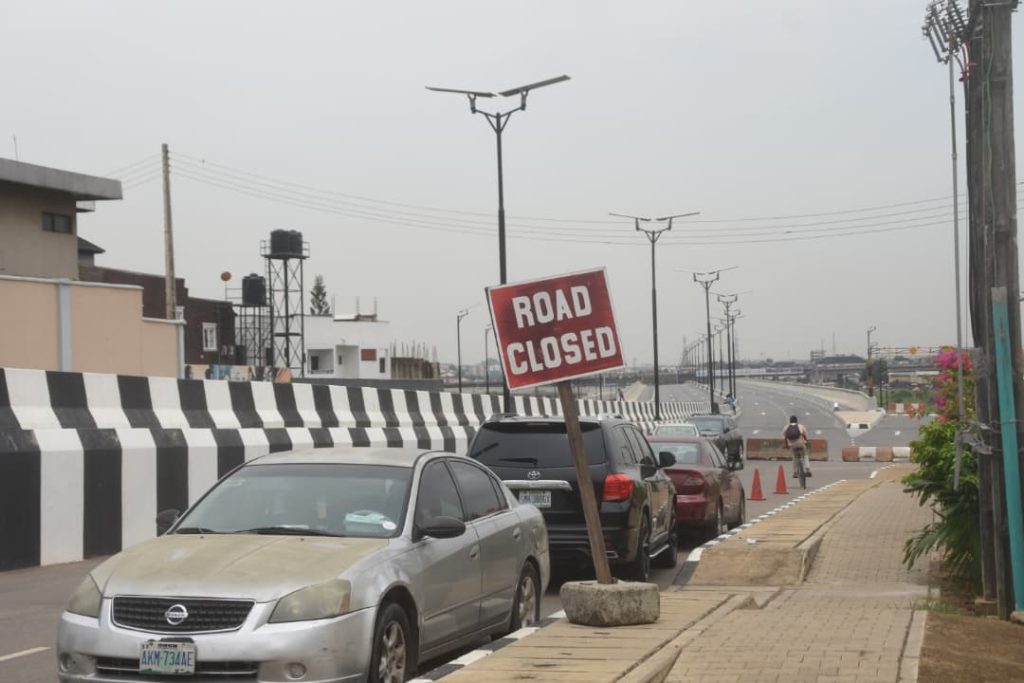
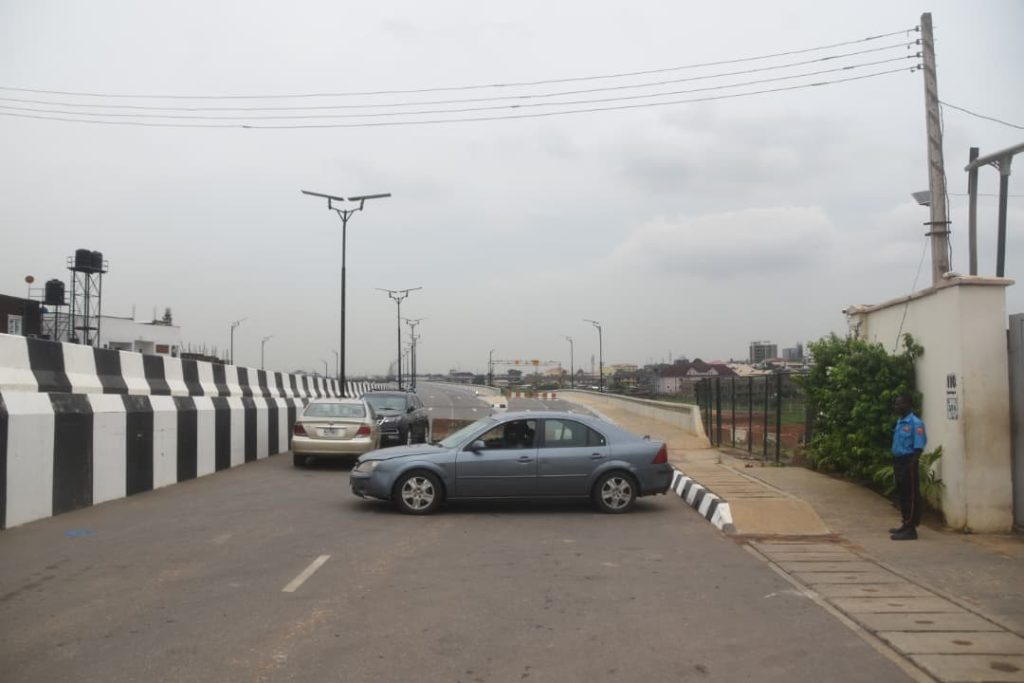
Currently, the bridge is barricaded, with a “Road Closed” sign preventing vehicular access. Only pedestrians and occasional dispatch riders on bicycles or motorcycles use the bridge.
The Lagos State Commissioner for Information and Strategy, Gbenga Omotoso, attributed the delay to ongoing finishing work, stating that the bridge is not yet ready for public use. In an interview, he said it could take about two months before the bridge is opened. “It’s ready, but what is not ready are what I think are the ‘aesthetic’ aspects of it, that the engineers are insisting they must do.”
Findings by IkejaBird show that work is still ongoing beneath the bridge. A construction worker, who spoke anonymously, explained that some of the bearings are being reworked, a process that could take up to six months, with the expectation that the bridge will be fully operational before the end of the year.
The Opebi-Ojota Link Bridge project was conceived on January 26, 2022, by Lagos State Governor Babajide Sanwo-Olu, with an initial completion timeline set for the second quarter of 2024. Months after that projected deadline and even after its commissioning, the infrastructure has yet to be made accessible for public use.
With a total length of 3.89 km, and a road length of 2.83 km, the bridge was designed as a major transport corridor linking Ojota, Maryland, Mende, Opebi and Allen. It’s expected to ease congestion in some of Lagos’ busiest routes and significantly reduce travel time for commuters in Ikeja.
Governor Sanwo-Olu has described the bridge as a major step toward improving mobility and making daily life less stressful for thousands of Lagosians. However, the reality of a commissioned bridge that remains unusable has sparked a debate on the politics of infrastructure.
As the 2027 election approaches, visible markers of development become high-value political currency. If the project is not yet functional, does this early commissioning suggest that political ceremony has been prioritised over public utility?