By Bababunmi Agbebi
For many Lagos commuters, the Sheraton Link Bridge has become more than just a route connecting key parts of Ikeja, it has evolved into a daily point of uncertainty. The steady presence of police officers along this stretch raises a persistent question: is this an official checkpoint, or something less clearly defined?
Authorities in Lagos have maintained that there is no formally designated checkpoint on the Sheraton Link Bridge. In policy terms, this means motorists are not expected to encounter structured stop-and-search operations typical of recognized checkpoints.
Yet, for those who use the bridge regularly, the experience tells a slightly different story.
During several passes across the bridge at different times of day, early mornings, late afternoons, and even off-peak hours the pattern appears consistent:
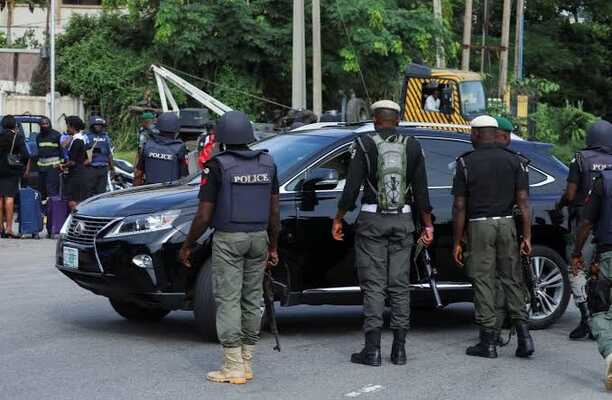
There are almost always officers present, often positioned at strategic points where vehicles naturally slow down. Sometimes they stand by the roadside observing traffic; other times, they actively signal drivers to stop.
On a typical weekday morning, for instance, I noticed a cluster of officers stopping vehicles selectively, usually private cars rather than commercial buses. The stops were brief, sometimes just a glance into the vehicle, other times involving a short exchange. No clear signage indicated a checkpoint, yet the behaviour mirrored one.
On another occasion in the evening, traffic built up slightly not due to congestion, but because drivers were hesitating, unsure whether they would be stopped. This hesitation alone created a ripple effect, slowing movement across the bridge.
Perhaps the most striking observation is the inconsistency. Some days, motorists pass through without interruption. On others, multiple vehicles are flagged down within minutes. This unpredictability contributes to the perception that the bridge operates as an informal checkpoint, even if not officially declared as one.
Technically, a checkpoint implies structure, clear purpose, visible coordination, and standardized procedure. What exists on the Sheraton Link Bridge lacks these defining features.
However, functionally, the experience often feels similar. When officers repeatedly stop vehicles in the same location, over extended periods, the distinction between presence and checkpoint begins to blur.
This situation highlights a recurring issue in urban traffic management: the difference between official policy and public perception.
In a city like Lagos, where road users are already accustomed to various forms of roadside enforcement, consistency matters. When enforcement appears irregular or undefined, it can lead to:
- Driver anxiety and hesitation
- Slower traffic flow
- Growing mistrust of enforcement practices
So, is the Sheraton Link Bridge a checkpoint?
By official definition, no.
By daily experience, it often feels like one.
Until there is clearer communication or more consistent operational patterns, the question will likely remain open in the minds of those who cross the bridge every day