Edited by Bababummi Agbebi
Nigeria’s independence in 1960 represented more than the transfer of political authority from colonial rule. It carried expectations of self-determination, economic opportunity and improved living standards for citizens.
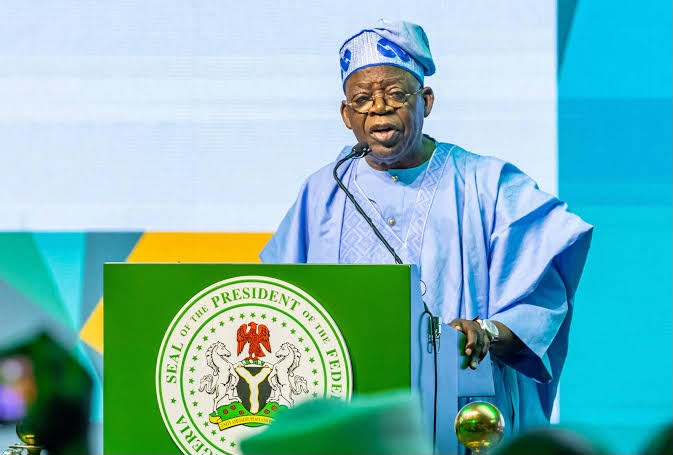
President Tinubu acknowledged this broader promise in his address, arguing that independence was ultimately about Nigerians having the freedom to shape their own destiny and build a country capable of providing opportunity, dignity and a better life.
However, he also recognised that the journey has been difficult. His speech referenced Nigeria’s experiences with civil war, military rule, economic crises, insecurity and political upheaval.
That acknowledgement provided the historical backdrop for the central argument of the address: that Nigeria’s present challenges cannot be separated from problems that have accumulated over several decades.
The strongest part of the President’s speech was his defence of the economic reforms introduced since he assumed office in 2023.
President Tinubu argued that previous policy choices allowed economic distortions to deepen and that his administration deliberately chose to confront those problems rather than postpone them.
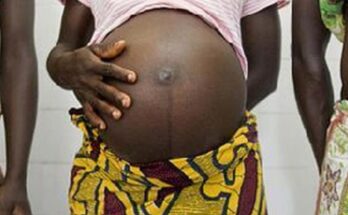
He acknowledged that millions of Nigerians are still struggling with basic needs, including food, school fees, medical expenses and transportation. However, he maintained that these challenges predated his administration and reflected problems that had accumulated over generations.
The President pointed to measures including social support for vulnerable households, the Nigerian Education Loan Fund, consumer credit initiatives through CREDICORP, and efforts to strengthen primary healthcare, education and other public services.
His message was therefore not that the economic pain has disappeared, but that the government believes the country has moved beyond the most difficult phase of its adjustment.
Perhaps the most significant political and economic message in the speech was the declaration that “the age of reform has done its work. Now begins the age of prosperity.”
That statement sets a clear expectation for the next phase of the administration.
The reform argument has largely centred on correcting structural problems in the economy. The prosperity argument, however, will ultimately be judged by what Nigerians experience in their daily lives.
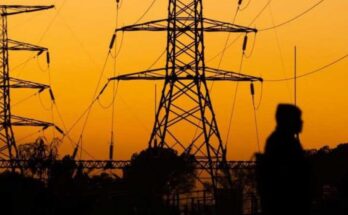
For citizens, the questions are practical: Will food become more affordable? Will purchasing power improve? Will businesses experience lower operating costs? Will employment opportunities expand? Will electricity become more reliable? Will public services improve?
These are the areas where the government’s economic narrative will increasingly meet the reality of ordinary Nigerians.
Another notable feature of the President’s speech was his acknowledgement that the benefits of reform have not yet been evenly experienced.
The President conceded that many families continue to face serious economic pressure. Rather than presenting prosperity as an achievement already fully delivered, he described it as the next objective.
This distinction is important.
The speech therefore combines two messages: a defence of the decisions taken since 2023 and an acknowledgement that Nigerians are still waiting for those decisions to translate into broader improvements in living standards.
The challenge for the administration is turning macroeconomic progress into tangible household-level outcomes.
At 66, Nigeria’s independence anniversary is also a reminder that nation-building is a continuous process.
President Tinubu’s speech placed considerable emphasis on the resilience of Nigerians farmers, traders, teachers, entrepreneurs and members of the security services presenting ordinary citizens as central to the country’s survival and progress.
For government, however, that resilience comes with a corresponding responsibility: creating an environment where citizens’ efforts can translate into meaningful economic and social progress.
Tinubu’s 2026 Independence Day address was ultimately a forward-looking speech. Its central proposition was that Nigeria has passed through a difficult period of economic correction and is now positioned to pursue broader prosperity.
Whether that promise becomes reality will depend less on the language of Independence Day and more on measurable outcomes in the months and years ahead.
Nigeria at 66 remains a country of enormous potential, but also one facing significant economic, security and institutional challenges. The significance of this year’s address therefore lies not only in what the President said about the country’s past, but in the expectations, he has now set for its future.
The next chapter will require more than optimism. It will require sustained economic growth, productive investment, stronger institutions, effective public services and opportunities that reach a wider proportion of Nigerians.
As the country celebrates another year of sovereignty, the enduring question remains the same: how can Nigeria transform its immense potential into a better lived reality for its citizens?
For President Tinubu, the answer is clear: Nigeria must move forward, without looking back. The responsibility now is to ensure that the promised prosperity becomes something Nigerians can actually see, feel and experience.
Recommended posts:
 ECOWAS of People: President Bola Ahmed Tinubu reveals his economic and political plans for ECOWAS
 New naira notes: Full speech of President Buhari as 500, 1000 no legal tender
 Tinubu Must be Disqualified, Why? 5 Issues That Can Disqualify Tinubu
 President Bola Tinubu attends Benin Republic’s 63rd independence anniversary