By Chiagoziem Abosi
Edited by Bababunmi Agbebi
On paper, it’s just a number.
But in reality?
It’s heavier than traffic on Allen on a Monday morning.
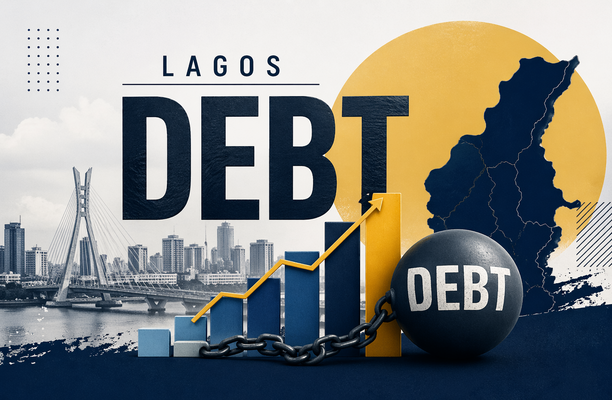
According to the Debt Management Office of Nigeria, Nigeria’s total subnational debt has climbed to ₦4.36 trillion in 2025.
And sitting right at the top is Lagos State, owing a staggering ₦1.04 trillion.
That’s over a trillion naira.
Borrowed.
Owed.
Hanging over the state that never sleeps.
Let’s Make That Number Make Sense
₦1.04 trillion is not just “big”, it’s abstract.
So, bring it closer:
- It’s more than the annual budgets of several Nigerian states combined
- It’s money that must be repaid with interest
- And yes, it’s money tied to the future of places like Ikeja
Here’s the uncomfortable question:
If Lagos is borrowing this much…
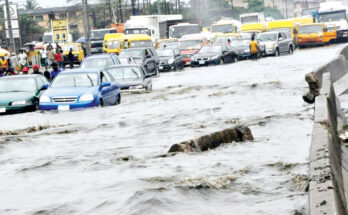
Why does it still feel like you’re navigating potholes and flooded streets every rainy season?
In Ikeja:
- some roads still struggle after heavy rain
- traffic still eats hours of your day
- businesses still deal with rising costs
So naturally, people are asking:
“Where is the impact?”
The Silent Effect on Your Pocket
Here’s where it gets personal.
When a state carries heavy debt, it doesn’t just sit quietly.
It can lead to:
- increased taxes and levies
- more pressure on businesses
- higher prices for goods and services
And in a place like Ikeja?
That could mean:
- more expensive food
- higher transport fares
- rising cost of doing business
You may not see the debt…
But you might be paying for it.
The Real Question Lagos Must Answer
This isn’t just about how much Lagos owes.
It’s about this:
Are residents of Ikeja actually feeling the benefits of that borrowing?
Because at the end of the day:
People don’t live in spreadsheets.
They live in streets.
₦1.04 trillion is not just a statistic.
It’s a test.
A test of whether borrowing can truly translate into better roads, smoother movement, and easier living…
or whether it simply becomes another number citizens carry without ever seeing the value.
Let’s be honest, do you feel like Lagos is improving where it matters?
Roads? Traffic? Flooding? Cost of living?
Or does it feel like everything is just getting more expensive?
Drop your experience in Ikeja 👇
Let’s talk real.