By Toochi Ejiofor
Edited by Bababunmi Agbebi
The decision to send people to prison for dumping refuse on the streets of Lagos is sparking intense debate. While the government wants clean roads, many are questioning whether putting waste offenders behind bars is doing more harm than good.
Tokunbo Wahab, the Commissioner for the Environment and Water Resources in Lagos State, has made noticeable efforts in environmental sanitation and waste management. The ministry recently reintroduced the monthly environmental sanitation exercise and has intensified monitoring, enforcement, and compliance with environmental laws across the state.
In this regard, the Lagos State Government announced stricter penalties for environmental offences in 2025. Offenders caught dumping refuse illegally or littering public spaces could face a ₦250,000 fine or up to three months in prison.
Recently, a number of individuals were arrested and arraigned before a magistrate’s court for dumping refuse indiscriminately, where they all pleaded guilty and were each sentenced to one month in prison.
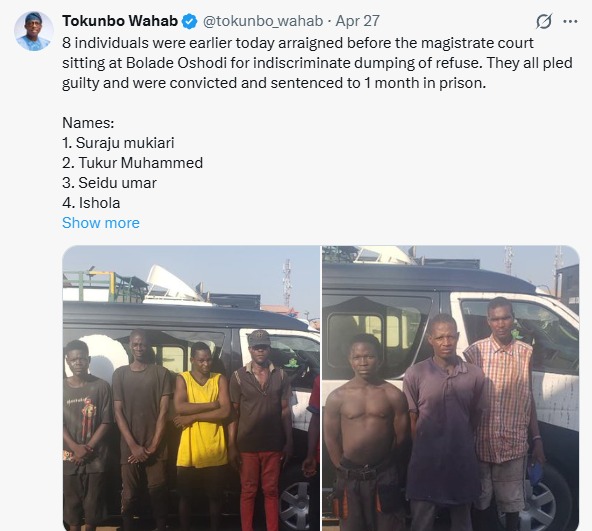
In a state with overcrowded prisons, this decision raises questions about the effectiveness of imprisonment for environmental offences, especially when alternatives like fines or community service could achieve compliance without further straining already congested correctional facilities.
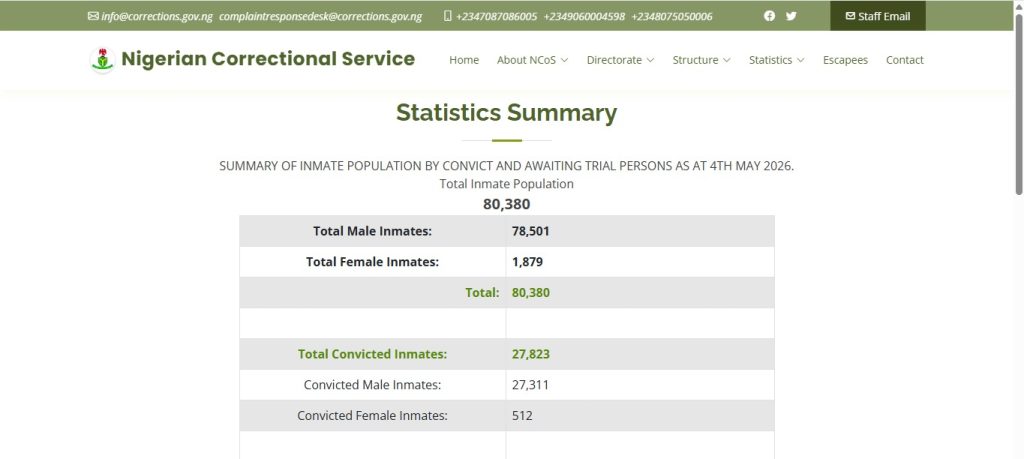
In Nigeria today, there are over 80,000 inmates in prisons. The National Bureau of Statistics says Nigeria’s inmate population rose from 69,946 in 2017 to 81,710 in Q2 2025, according to its latest correctional service report. Lagos State recorded the highest inmate population with 9,209 inmates against a correctional centre capacity of 4,167 in Q2 2025, reflecting significant overcrowding.
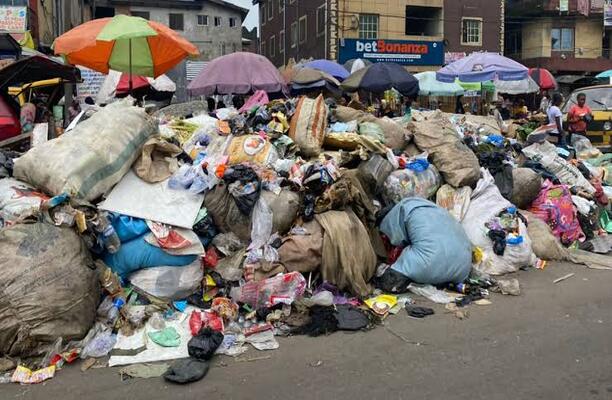
Instead of solving the problem, the government’s approach may be creating a bigger one. At its core, indiscriminate dumping is not just an act of indiscipline but a symptom of weak waste management infrastructure. Many residents in Lagos State resort to illegal dumping because regular and reliable waste collection is not consistently available in their communities. Locking people up addresses the symptom, not the underlying cause.
A more sustainable solution requires shifting from punitive measures toward systemic reform. The state needs stronger investment in accessible community waste collection, functional recycling systems, and sustained public education.
Alongside this, offenders could be sentenced to community service as an alternative to a jail sentence, as seen in many countries. In this case, a suitable example could involve the offenders cleaning public spaces, clearing gutters or drainage. Not only will this serve as a form of punishment or a way to encourage responsibility, but it will also reduce overcrowding in prisons.
With stronger waste systems, public education, and practical alternatives like community service, Lagos State can enforce environmental laws effectively without worsening the overcrowding crisis in its prisons.
Recommended posts:
 Why Does Lagos Smell? The Uncomfortable Truth About Waste, Open Urination, and Defecation in the City of Hustle
 Ladipo Market Closure Highlights Lagos’ Ongoing Waste Management Challenges
 Lagos Govt, Ikeja LG Partner on ‘Operation Clean Ikeja’
 Plastic Gold: How Ikeja’s Waste Pickers Turn Litter Into Livelihood