By Toochi Ejiofor
Edited by Bababunmi Agbebi
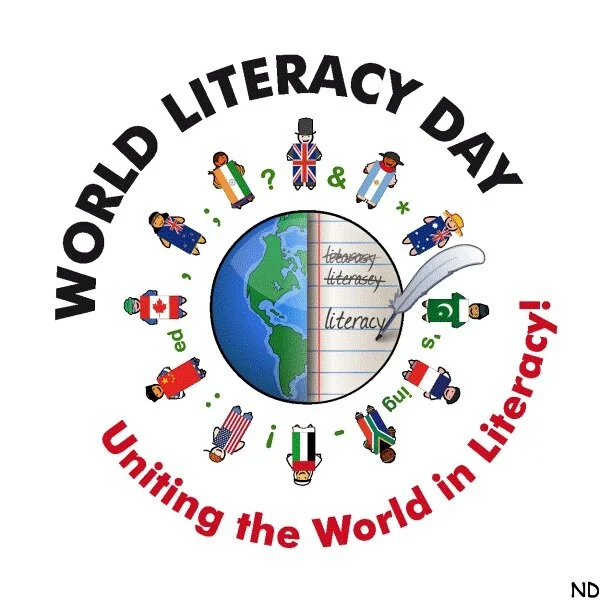
As the world marks International Literacy Day today, September 8, attention is once again drawn to the millions of people who still lack the basic skills needed to read and write.
UNESCO estimates that at least 739 million young people and adults worldwide lacked basic literacy skills in 2024. The organisation also reports that four in 10 children are not reaching minimum proficiency in reading, while 272 million children and adolescents were out of school in 2023.
Literacy is a basic human right. It opens the door to education, enables people to participate in decisions that affect their lives and empowers them to claim other rights. In a country with a large and youthful population like Nigeria, improving literacy is therefore of great importance as it aids people’s ability to participate fully in society.
Nigeria has made progress in adult literacy over the years. According to Statista, the country’s adult literacy rate among people aged 15 and above stood at 70.41 per cent in 2024, representing a 14.96 percentage-point increase from 1991. However, this isn’t enough.
An estimated 75 per cent of children aged 7 to 14 in Nigeria cannot read a simple sentence or solve a basic mathematics problem. About 37 per cent of young women aged 15–24 in Nigeria, equivalent to about 5 million women, cannot read a simple sentence.
The figures from UNESCO show that the challenge is not limited to access to education. For millions of people, the ability to understand written information and use knowledge in everyday life remains out of reach.
Thus, there is a need for the government to step up.
Improving literacy therefore requires more than getting children into classrooms. It also means ensuring that they acquire the foundational skills needed to learn, work, make decisions and contribute meaningfully to the society.
UNICEF recommends reducing the number of out-of-school children by creating safe and violence-free learning environments, engaging communities on the importance of education and providing financial support to vulnerable households and schools. Children must also be taught to read and understand simple texts within the first three years of schooling.
Additionally, Nigeria must increase domestic spending on education towards the 20 per cent global benchmark by 2030, particularly to address gaps in infrastructure and teaching.
We should remember that a literate population is better equipped to learn, work, make informed choices and participate in building the country.