By Chiagoziem Abosi
You step on the scale, see the number going down and celebrate.
But then you look in the mirror and think, “Hmm… I lost weight, but is this actually the shape I wanted?”
That is where the difference between weight loss and body recomposition becomes important.
Both can help you change your body. But they are not exactly the same thing, and the better option depends on what you actually want to achieve.
First, what is weight loss?
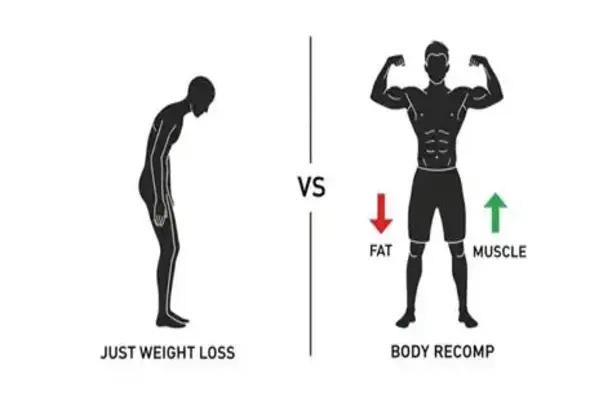
Weight loss simply means reducing your overall body weight.
The number on the scale can go down because you lose body fat, muscle, water or a combination of these.
Usually, weight loss happens when you consistently consume fewer calories than your body uses. This is known as a calorie deficit.
Your diet, daily movement and exercise can all contribute to creating that deficit.
If your main goal is simply to weigh less, traditional weight loss may be exactly what you’re looking for.
But there is a catch.
When people lose weight through dieting alone, some of the weight lost can come from lean mass, including muscle. That’s one reason resistance training matters during weight loss. A recent systematic review found that adding resistance exercise to dietary weight loss helped protect fat-free mass, increased fat loss and improved muscle strength.
So, what is body recomposition?
Body recomposition takes a different approach.
Instead of focusing primarily on the number on the scale, the goal is to reduce body fat while maintaining or building muscle.
That means your weight might not change dramatically, even though your body composition is changing.
You could lose fat around your waist while building muscle in your legs and glutes.
And this is where people sometimes get confused.
You are not turning fat into muscle.
You are losing fat tissue while your muscles become larger or stronger through resistance training.
What does body recomposition require?
There is no magic “recomposition diet.”
It generally involves a combination of resistance training, appropriate nutrition, adequate protein and enough recovery.
Resistance training can include weightlifting, resistance bands, machines or even bodyweight exercises. Research shows resistance training can reduce body-fat percentage and fat mass while supporting muscle development.
Protein also matters because your muscles need amino acids to repair and build tissue. Research supports the combination of protein intake and resistance training for improving lean mass.
Cardio can also be part of the programme.
Walking, running, cycling, swimming or other aerobic activities can help improve cardiovascular fitness and contribute to energy expenditure. But you don’t need to choose between cardio and weights. Evidence suggests combining aerobic and resistance training can be particularly useful for reducing fat while retaining more lean mass than aerobic exercise alone.
But which one is better?
There isn’t one universal winner.
If your main goal is to reduce your body weight, weight loss may be the more straightforward approach.
If your goal is to lose fat, maintain or build muscle and change the way your body looks, body recomposition may be more appropriate.
For someone who wants to become smaller but also wants to maintain their muscle and shape, combining a sensible calorie deficit with resistance training may offer advantages over simply eating less and doing lots of cardio.
And yes, this can matter if you’re concerned about losing muscle in areas you want to maintain or develop, including your glutes. But no training programme can tell your body to lose fat from one specific area. Spot reduction is not something you can reliably control through exercise.
Remember, if you’re doing resistance training and losing fat while gaining some muscle, the scale may move slowly even though your clothes fit differently and your body composition is improving.
So don’t judge your progress using weight alone.
Whichever route you choose, sustainable nutrition, regular exercise and consistency will take you much further than chasing a quick transformation.
If you have a medical condition, pregnant, have a history of eating disorder, or unsure how to structure your nutrition or training, speak with a qualified health professional before starting a programme.