
By Suad Ayinla.
Edited by Bababunmi Agbebi
What does it really mean when we say Lagos youths are “running the economy” and why does that story, in many ways, start from Ikeja?
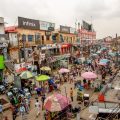
In Ikeja, the capital of Lagos, youth businesses are woven into almost every corner of daily life. From Alausa’s government district to Computer Village’s phone and gadget maze, young entrepreneurs are running food stalls, fashion brands, logistics services, tech micro‑startups, salons, studios, and one‑person “agencies.” Ikeja is where many of them test ideas: a kiosk becomes a small shop, an Instagram page becomes a brand, a co‑working desk becomes a startup office. Money moves because they are constantly selling, fixing, delivering, designing and creating.
Yet, for all the energy in Ikeja, most of these youth‑run businesses operate on very thin margins. Rent in the area is high, power is unpredictable, data is expensive, and transport can swallow profit faster than any tax. Many young entrepreneurs here stand in a daily gap between big dreams and small cashflows: they contribute to the buzz of Alausa and the markets, but one bad week slow sales, a broken phone, a new fee can push them dangerously close to closing shop. Ikeja’s “centrality” means opportunity, but it also means more competition, more bills and more pressure to “look serious” even when the numbers don’t add up.
This pressure is visible in their routines. Youths in Ikeja often juggle multiple roles, employee by day, business owner by night; student in the week, vendor at weekend events; freelancer online, hustler offline. They attend training programmes, pitch events and business clinics around Alausa and the Central Business District, while still rushing back to meet customer orders and social media demands. On the surface, it looks glamorous: branded tote bags, colourful flyers, professional photos. Underneath, it is a constant balancing act between visibility, quality and survival.
At the same time, Ikeja gives these young entrepreneurs something important: a sense of being part of a bigger story. Here, government offices, private hubs, training centres and co‑working spaces sit within a few minutes of bus parks and roadside stalls.
A youth who starts small in Ikeja can see literally on the next street that business can grow, that other young people have moved from tiny setups to more stable operations. That proximity keeps hope alive, even when the hustle feels like living on the edge.