
By Toochi Ejiofor
Edied By Bababunmi Agbebi
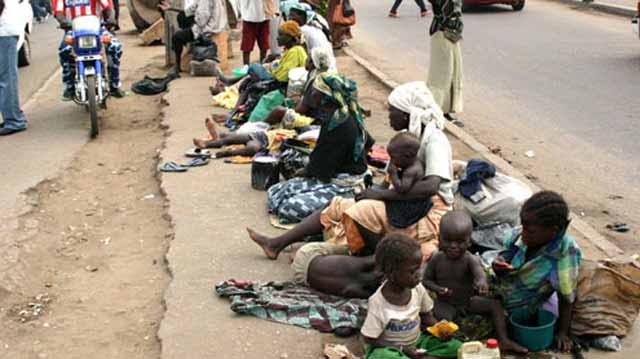
The Lagos State House of Assembly will, on Tuesday, hold a public hearing on a proposed law seeking to prohibit, prevent and rehabilitate street beggars and street urchins across the state.
The public hearing on the Street Begging & Street Urchins (Prohibition, Prevention & Rehabilitation) Bill 2026 will be held at the Lateef Jakande Auditorium, Lagos State House of Assembly Complex, Ikeja.
The proposed legislation is not the first attempt by Lagos to regulate street begging.
What does the existing law say?
Lagos already has provisions under its Criminal Law that have been used in addressing activities associated with street begging and disorderly conduct in public places.
Section 168(b) of the Criminal Law of Lagos State 2015 states that, “every person who places himself in any public place to beg or gather alms, or causing or procuring or encouraging any child or children to do so,” shall be deemed a disorderly person.
So what is the new bill seeking to do?
The bill advanced by the Assembly in July seeks to establish a more specific legal framework for dealing with street begging, focusing on ‘prohibition, prevention and rehabilitation.’ It passed second reading in July, after lawmakers described street begging as a concern for public safety, environmental sanitation and the image of the state.
In June alone, Lagos State apprehended over 360 beggars in a fresh clampdown to improve public safety and maintain a cleaner and more orderly environment.
Thus, the proposed law seeks to strengthen existing laws protecting children from exploitation, while creating a formal system for the custody, rehabilitation and reintegration of people living on the streets.
It gives LAGESC/KAI the power to arrest offenders without a warrant, seize items linked to the offence and hand suspects over to the police. Enforcement must still follow constitutional rights against torture and unlawful detention.
First-time offenders would receive a warning and be referred to a rehabilitation facility. A second offence could attract a fine of up to ₦200,000, up to three months of non-custodial punishment, or both. Serial offenders could face up to two years in prison. Parents or guardians who exploit children for street begging could also face penalties under the bill and existing child protection laws.
The public hearing therefore provides an opportunity for lawyers, civil society organisations, government agencies, affected communities and other members of the public to examine how the proposed law would fit into Lagos’ existing legal framework and how its provisions on prohibition, prevention and rehabilitation should operate.
Will this finally address the enforcement gap that has allowed street begging to persist across Lagos despite the existing law?
Recommended posts:
 Why Lagos state is moving to criminalize street begging
 More Youths Turn to Begging to Survive
 “Leave her, begging is her destiny”: Nigerian man calls out a beggar he helped who went back to begging in the streets
 DEAD ON ARRIVAL
Lawmakers trash bill to stop children of public officials from schooling abroad