
By Suad Ayinla
Edited by Bababunmi Agbebi
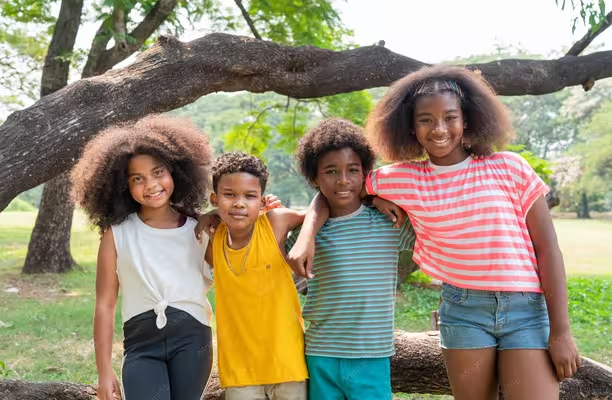
What exactly should children be doing with all this free holiday time and how are parents coping with the sudden wave of “Mummy, I’m bored” echoing through Lagos homes?
Across neighbourhoods, the school break has turned living rooms into mini playgrounds, kitchens into experimental laboratories and compounds into football pitches. Parents who once relied on the structure of school hours now find themselves improvising daily schedules to keep children busy without turning the television into an unpaid nanny. Many say the first week is fun, late wake‑ups, cartoons and visits but by the second week, the challenge begins: how to stop the holiday from becoming a long stretch of noise, gadgets and scattered toys. As one mother in Ikeja puts it, “If I don’t plan their day, they will plan my headache.”
To avoid that headache, families are quietly building their own holiday systems. Some parents set up simple routines: mornings for reading and quiet games, afternoons for outdoor play and light chores, evenings for family time. Children rotate through activities like drawing, painting, board games, basic cooking, and storytelling, giving each day a different flavour. Others create “activity corners” at home a small table with crayons, puzzles and books so that whenever boredom strikes, children have somewhere to go besides the screen. In compounds and streets, older kids organise informal football matches and skipping contests, turning the break into a mix of exercise, friendly competition and laughter.
But beyond fun, many parents are using the holiday to slip in learning and responsibility without calling it “holiday homework.” Children help with shopping lists and simple calculations at the market, keep short journals about their day, or read aloud to younger siblings. Small chores, arranging rooms, watering plants, clearing tables become part of the daily routine, teaching them that rest doesn’t mean abandoning teamwork at home. Some caregivers encourage children to set one “holiday goal”: learning a new skill, reading a certain number of books, or mastering a game that requires thinking. These subtle lessons turn free time into a training ground for independence and character.
Still, the report from many households is that parents themselves need strategies. Juggling work, traffic and restless children is no small task. Those who succeed tend to plan ahead, limit but not completely ban screen time, and join in the fun occasionally reading a chapter, playing one game, watching one film together. They also pay attention to emotions: changes in routine can make some children clingy, irritable or unusually quiet. A short conversation or a shared activity often does better than another new toy. In this way, the holiday becomes not just a break from school, but a chance for families to understand one another better.
And when the holiday finally ends, the big question for many homes will be this: will the children remember these weeks as a blur of cartoons and complaints, or as a season of playful discovery where they stayed busy, learned new things and grew closer to the people they live with?
Recommended posts:
 No Break for Brains – Why Lagos Kids Hit the Books During Holidays
 10 Places Nigerians Can Visit Visa-Free For The Holidays
 Lagos Plans to Ban Children from Streets During School Hours: Impact on Ikeja Kids
 School Safety in Nigeria: How Parents and Schools Can Protect Children from Kidnapping and Abduction