By Bababunmi Agbebi
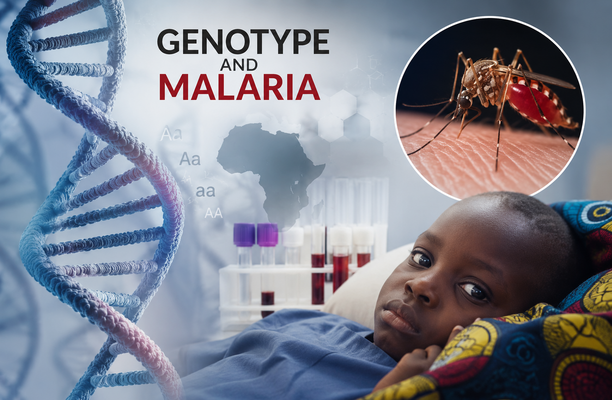
In many Nigerian homes, it is common to hear statements such as, “Your genotype is AA, that’s why you fall sick with malaria all the time.” The belief has been passed down through generations and is often accepted as medical fact.
But does having the AA genotype actually make someone more susceptible to malaria?
The answer is yes, but with important scientific context.
Understanding Genotypes
A person’s genotype refers to the combination of genes inherited from both parents that determine the type of haemoglobin found in red blood cells.
The common haemoglobin genotypes include:
- AA – Normal haemoglobin.
- AS – Sickle cell trait; the person carries one sickle cell gene but usually does not have sickle cell disease.
- SS – Sickle cell disease.
- AC and SC – Other haemoglobin variants.
While genotype is commonly discussed in Nigeria before marriage because of sickle cell disease, it also plays a role in understanding malaria risk.
The widespread belief is rooted in real scientific observations.
For decades, researchers have found that people with the AS genotype (sickle cell trait) have a natural level of protection against severe malaria caused by Plasmodium falciparum, the deadliest malaria parasite in Africa.
This means that compared with individuals who have the AA genotype, people with AS are less likely to develop severe or life-threatening malaria.
However, this does not mean they cannot become infected.
Medical experts explain that having the AA genotype does not cause malaria, nor does it automatically mean a person will frequently suffer from it.
Instead, people with AA simply do not have the partial genetic protection enjoyed by those with the AS genotype.
As a result:
- AA individuals can contract malaria when bitten by infected mosquitoes.
- They may be more likely than AS individuals to develop severe malaria if infected.
- Their overall risk is also influenced by mosquito exposure, immunity, age, nutrition, environment and access to prompt treatment.
In other words, genotype is only one piece of the puzzle, regardless of genotype, anyone can get malaria if exposed to infected mosquitoes.
Risk increases when people:
- Sleep without insecticide-treated mosquito nets.
- Live in areas with stagnant water where mosquitoes breed.
- Delay seeking treatment after symptoms begin.
- Do not use recommended mosquito prevention measures.
- Have weakened immunity, such as young children and pregnant women.
The popular Nigerian belief is partly true but often misunderstood.
People with the AA genotype are not inherently “malaria magnets.” Rather, they lack the partial protection against severe malaria associated with the AS genotype.
No genotype offers complete immunity. Everyone remains vulnerable to malaria infection if bitten by an infected mosquito.
Ultimately, preventing mosquito bites, seeking prompt medical care and following proven public health measures are far more important than genotype alone in reducing malaria-related illness.
As experts continue to study the relationship between genetics and infectious diseases, one message remains clear: malaria prevention is everyone’s responsibility, regardless of blood type.