
By Toochi Ejiofor
Edited by Bababunmi Agbebi
In 2021, Joy (not her real name) received an interview invitation after weeks of job applications. However, a quick online search changed everything. The address provided for the interview appeared on multiple websites, including Nairaland, where it had been listed among known fake job venues.
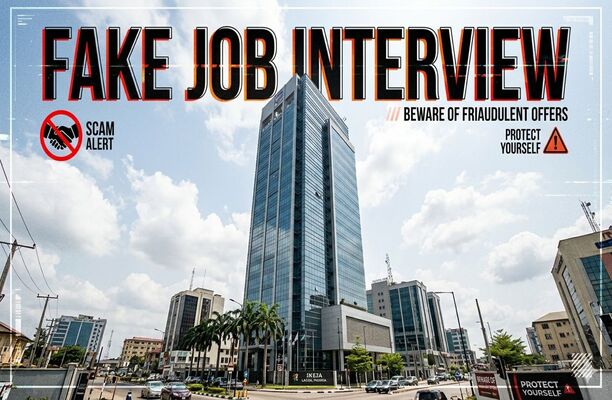
Her experience reflects a growing pattern that has persisted for years. For over a decade, Ikeja and Ogba have been associated with reports of fraudulent job scams. These areas tagged ‘Headquarters of fake jobs’ in Lagos have gained a reputation as hotspots for scams, which till today, are avoided by job seekers.
Victims are often lured with promises of employment, only to face long waiting periods, demands for payment, or, in some cases, safety risks. One commonly cited scheme involves multi-level marketing organisations such as GNLD, now rebranded as NeoLife, where applicants are drawn in with the promise of high-paying roles but are instead introduced to sales structures that make it difficult to earn a stable income.
Tosin, a recent graduate, said she had a similar experience while applying for jobs. Shortly after submitting several applications, she began receiving multiple interview invitations within a short period.
“I was applying for some jobs on job boards, and after making some applications, a week after, I started getting these SMS messages from different companies, but they were all in the same location, and it was that Ogba, Ikeja side,” she shared. “I tried to Google the company, and I didn’t see it.”
She added that the frequency of the messages was unusual, raising further suspicion. “I did not attend, even though I wanted to attend, because I was desperate at that time. I was looking for money. I didn’t attend because it looked suspicious.”
Timothy nearly fell victim in 2016 after receiving an unexpected interview invitation during his job search. “After waiting a long time for interview invitations, I received a message from an unknown number asking me to come for an interview on Ikorodu Road; the company name was not provided.”
The lack of details raised concerns, prompting him to consult friends. “One of them warned me that it was likely a scam. Fraudsters send mass messages, invite people to attend, then demand a registration fee, often ₦5,000, and promise to ‘link’ them to the job. After payment, nothing happened. I also heard of similar incidents occurring around Anifowose, Ikeja,” he added.
A user on X (formerly Twitter), @DgenzhrHub, recently shared a list of addresses across various locations, including Ogba, Opebi, Agidingbi, Surulere, Yaba, and Maryland, alleging links to fraudulent recruitment activities. The post generated reactions, with several users sharing similar experiences and warning others to be cautious. Many pointed to the recurring mention of Ogba in such reports, reinforcing concerns about the area’s association with fake job schemes.
This issue highlights growing anxiety around job scams in Nigeria, where high unemployment rates have made job seekers more vulnerable to fraudulent schemes. As of Q4 2024, Nigeria’s unemployment rate stood at 4.9%.
Most recently, Alade received an email inviting him to a job interview, but several inconsistencies made him question its authenticity. The interview was scheduled to take place in Ogba about two weeks ago. However, the email was sent from a personal address and lacked a professional format. It also failed to specify the role he had applied for.
“I got one job interview last two weeks, but I didn’t go. It was in Ogba. They didn’t even specify the role I applied for, and I don’t remember applying for the company,” he said.
As job seekers continue to navigate the labour market, caution is becoming as essential as qualification. Doing due diligence remains critical to avoiding falling victim to fraudulent schemes. Applicants should verify company details, avoid paying upfront fees, and confirm office legitimacy before attending interviews.