By Ejiofor Toochi
Edited by Bababunmi Agbebi
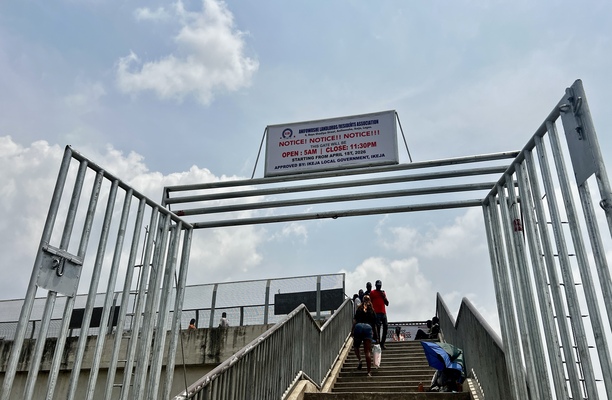
The Anifowoshe Landlords and Residents Association, in February 2026, installed an iron gate on the pedestrian bridge across the railway line at Ikeja Along. According to the notice placed, the gate will restrict pedestrian access between 11:30 p.m. and 5 a.m. daily, effective from April 1,2026.
The development, believed to be the first of its kind, was a surprise to many. Pedestrian bridges are ideally built to serve the public, to help people cross busy roads and reduce incessant deaths on highways across the state. But what happens when a security gate is installed on the bridge?
Broadcast journalist, Oseni Rufai, in a post on X (formerly Twitter), described it as an unauthorised modification of ‘federal public infrastructure.’ He implied that the gate restricts pedestrian access and poses potential safety and emergency risks.
Rufai’s post sparked mixed reactions from Nigerians. While many criticised the installation of the gate, accusing those behind it of using it as a means to extort pedestrians, others warned that closing the bridge at certain hours could leave commuters stranded and force people to cross the busy highway, putting their lives at risk. Some, however, supported the installation, arguing that the bridge had become a hotspot for robbery and other crimes at night. One commenter said the ‘atrocities that occur there after dark make it necessary for the area to be locked for safety.’
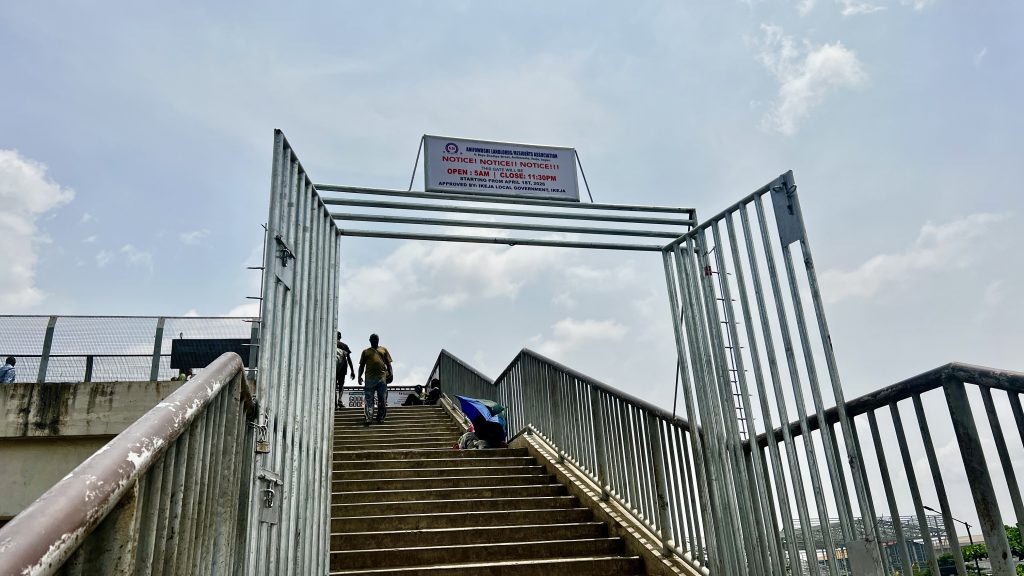
The Chief Press Secretary to the Executive Chairman of Ikeja Local Government, Olalekan Oni, clarified that the infrastructure where a security gate was installed is owned by the Lagos State Government, not the Nigerian Railway Corporation or the Federal Government, as previously claimed by Rufai. He told the Nation that the gate was installed after a stakeholders’ meeting involving LAMATA, the local government, and community representatives, following security concerns in the corridor.
Residents and local authorities in the Anifowoshe community say the installation of the iron gate on the pedestrian bridge aims to address persistent security threats in the area.
Treasurer of the Anifowoshe Landlords and Residents Association, Olatunbosun, told IkejaBird that the installation of the gate was a response to repeated incidents of robbery along the bridge. “That place has been a notorious place for all these activities; pickpocketing, stabbing and obtaining people by force on that bridge at late hours,” he said.
He confirmed that the decision to install the gate was made following consultations with the relevant authorities. “We wouldn’t have installed the gate if we didn’t have the go-ahead or permission from the Local Government,” he said, noting that the association also engaged with the Lagos Metropolitan Area Transport Authority (LAMATA).
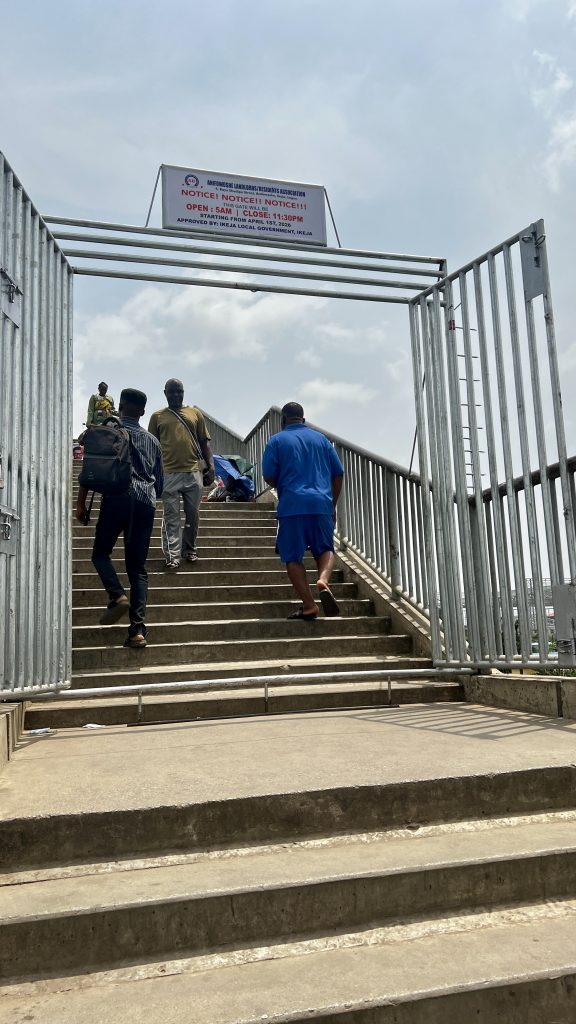
Similarly, Hon. Idris Opeyemi Salami, Councillor representing Ward D in the Anifowoshe community and Chief Whip of the Ikeja Legislative House, said the measure was introduced to improve safety in the area.
“After deep consultation with relevant stakeholders, the iron gate was installed to ensure that the lives of all pedestrians making use of that corridor, as well as residents within that community are protected,” he told IkejaBird.
Salami explained that authorities had received reports of repeated incidents along the bridge. “In recent times, we’ve been having security threats within that corridor — bag snatching, phone snatching,” he said.
Security concerns on pedestrian bridges are not new in Lagos. In August 2025, BusinessDay reported that many pedestrian bridges across Lagos have turned into a den for street urchins to rob innocent pedestrians. “In many places across the state, many of the bridges are deserted at night as pedestrians prefer to dash across the road for fear of being attacked,” the article read.
As the debate continues, the development has highlighted the broader challenge of insecurity on pedestrian bridges across the state and the need to better protect users. From April, pedestrians will have to adjust to the new arrangement. But will this solution improve safety without creating new risks for commuters?