
By Bababunmi Agbebi
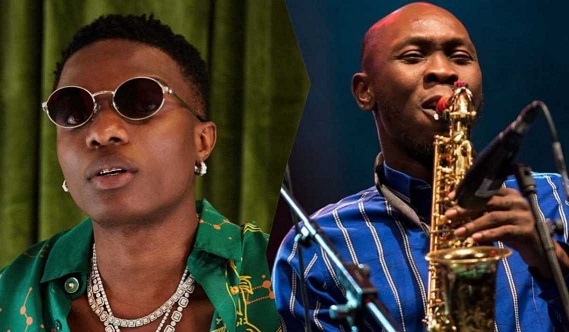
Nigerian social media recently lit up after Grammy-winning Afrobeats superstar Wizkid reportedly told activist and musician Seun Kuti, “I am bigger than your father.” The statement short, sharp, and provocative instantly ignited conversations that stretch far beyond celebrity banter, touching on legacy, generational influence, and what “greatness” truly means in modern African culture.
At face value, the comment appears to be another heated exchange between two high-profile figures with strong personalities. But in Nigeria’s cultural landscape, invoking Fela Anikulapo Kuti, Seun’s father and one of Africa’s most revered musical and political icons is never just casual trash talk. It is, intentionally or not, a challenge to history itself.
Two Names, Two Eras, Two Kinds of Power
Wizkid, born Ayodeji Balogun, is undeniably one of Africa’s most successful contemporary musicians. With global chart dominance, sold-out arenas, international awards, and collaborations with some of the world’s biggest artists, Wizkid represents the commercial and cultural peak of modern Afrobeats. His music has helped reposition African sound on the global stage, turning what was once niche into mainstream.
Seun Kuti, on the other hand, stands firmly in the shadow and light of his father’s legacy. As the leader of Egypt 80, Fela’s former band, Seun has dedicated his career to preserving Afrobeat’s original political edge. His music is less about charts and more about resistance, activism, and Pan-African ideology.
When Wizkid claims to be “bigger,” the immediate question arises: bigger by what measure?
In today’s metrics-driven entertainment industry, “bigger” often means numbers, streams, followers, awards, endorsements, and global recognition. By those standards, Wizkid’s claim is easy to defend. His reach is massive, his brand is global, and his influence on contemporary African pop culture is undeniable.
But Fela Kuti’s “bigness” was never about numbers alone. Fela was a movement, a cultural revolutionary whose music challenged military regimes, colonial mentality, and social injustice. His legacy shaped not just sound, but political consciousness across generations. To many Africans, Fela is not a man to be outgrown, but a standard to be revered.
This is why Wizkid’s remark struck such a nerve. It collided two definitions of greatness: commercial dominance versus historical impact.
Wizkid has long cultivated an image of confidence often bordering on arrogance and his fans largely celebrate it as the swagger of a global star who has earned his place. Seun Kuti, equally unapologetic, has never shied away from confronting what he sees as moral or cultural compromises in modern music.
In that sense, the clash feels almost inevitable: a superstar of the new age versus a custodian of the old guard.
Yet, moments like this also raise questions about respect within artistic spaces. Can modern success coexist with reverence for foundational figures? Does asserting one’s dominance require diminishing the past?
Beyond the headlines and social media memes, the exchange has forced Nigerians and Africans at large to reflect on how they define influence. Is it global visibility, or lasting ideological change? Is it stadium tours, or the courage to confront power?
Perhaps the real takeaway is that both men are “big” in different ways. Wizkid is a giant of his era, reshaping Africa’s image in global pop culture. Fela Kuti remains a towering figure in African history, whose impact transcends music. Seun Kuti, standing between both worlds, continues to defend that legacy in an age that often values fame over substance.
In the end, the controversy may fade, but the debate it sparked will linger. reminding us that in culture, size is rarely one-dimensional.