
By Bababunmi Agbebi
Edited by Ezennia Uche
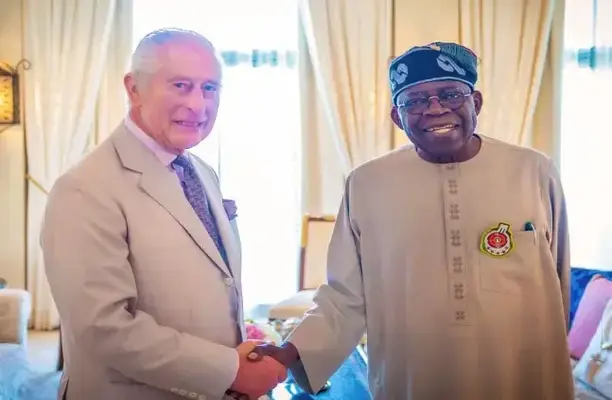
In a landmark diplomatic development, President Bola Ahmed Tinubu of Nigeria has accepted an official invitation from His Majesty King Charles III to undertake a State Visit to the United Kingdom scheduled for March 18–19, 2026. This engagement marks the first state visit by a Nigerian head of state to the UK in 37 years, since the visit of General Ibrahim Babangida in 1989.
The forthcoming visit, to be hosted by King Charles III and Queen Camilla at Windsor Castle, underscores the enduring diplomatic, historical, and economic ties between Nigeria and the United Kingdom. President Tinubu will be accompanied by his wife, First Lady Senator Oluremi Tinubu, highlighting the visit’s status as a symbolic and strategic engagement between the two nations.
Nigeria and the UK share a deep-rooted relationship that spans over a century, shaped by colonial history, Commonwealth membership, and sustained bilateral interaction. In the post-independence era, official state visits were infrequent with the last formal Nigerian state visit to Britain occurring nearly four decades ago. The invitation extended by King Charles revitalizes this tradition at the highest level and reflects mutual respect and renewed commitment to collaboration.
Several key factors are likely to have influenced and underpinned the UK’s decision to invite President Tinubu:
1. Strengthening Bilateral Relations
The UK and Nigeria have been actively deepening diplomatic, economic, and security ties. Both countries signed a strategic partnership agreement in November 2024, which aims to expand cooperation on trade, investment, security, migration, and governance. A state visit provides a high-profile platform to formalize, review, and elevate these commitments.
2. Economic and Investment Cooperation
Nigeria, Africa’s largest economy by population and one of its most dynamic markets, remains a priority partner for the UK in trade and investment. The state visit presents an opportunity to attract British investors, discuss economic reforms, and explore areas of mutual commercial interest particularly in sectors such as energy, technology, infrastructure, and financial services. Politically, this engagement amplifies the message that Nigeria is open for business and ready to engage with global partners.
3. Security Collaboration and Shared Global Challenges
Both countries face significant regional and global security challenges, from counterterrorism to transnational crime and climate-related security risks. Nigeria and the UK have a history of security collaboration including training, intelligence sharing, and support for peacekeeping efforts. The state visit will likely include discussions aimed at reinforcing cooperation in these areas and coordinating responses to emerging threats.
4. Commonwealth and Multilateral Engagement
As members of the Commonwealth of Nations, both Nigeria and the UK share platforms focused on democratic governance, human rights, economic development, and climate action. High-level engagements such as state visits help align positions ahead of key multilateral forums including Commonwealth Heads of Government Meetings (CHOGM), climate summits, and global development discussions.
State visits carry significant soft-power and ceremonial value. The British monarchy traditionally uses the pomp and hospitality associated with state visits to symbolize friendship and mutual respect between nations. For Nigeria, the invitation signals international recognition of its strategic importance in Africa’s political and economic landscape. For the UK, it reaffirms a commitment to engaging robustly with one of Africa’s most influential nations.
King Charles III’s invitation to President Bola Tinubu for a state visit to the United Kingdom is more than a ceremonial engagement, it is a strategic diplomatic milestone that reflects deepening ties, shared interests, and mutual aspirations. Set against a backdrop of evolving global challenges, the visit is likely to catalyze cooperation in areas critical to both nations, from economic growth and security to cultural exchange and multilateral diplomacy.
Recommended posts:
 Tinubu’s meets with King Charles III before COP28 Climate Conference
 ECOWAS of People: President Bola Ahmed Tinubu reveals his economic and political plans for ECOWAS
 Global player: Tony Elumelu meets King Charles III, Joe Biden at world leaders forum
 Tinubu set to attend 78th United Nations General Assembly in New York