By Bababunmi Agbebi
Edited by Ezennia Uche
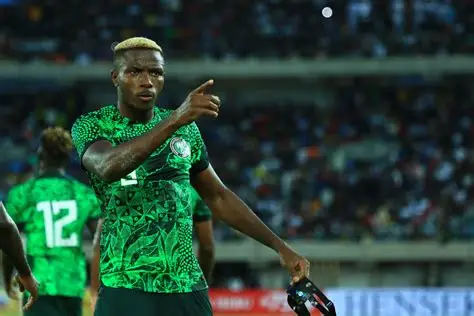
Victor Osimhen, Nigeria’s star striker and one of Africa’s most high-profile footballers, is widely admired for his intensity, leadership, and competitive drive. However, during a recent match played in Morocco, Osimhen was involved in an emotional on-field outburst that attracted significant attention from fans, media, and football authorities.
The incident occurred in a tense competitive environment, where emotions were already running high due to physical play, officiating decisions, and the overall stakes of the match. Osimhen was visibly frustrated and reacted strongly on the pitch, directing his anger toward match officials and/or opponents in a manner that was perceived as unsportsmanlike.
While passion is often celebrated in elite football, such reactions especially from a senior and influential player can overshadow performance and place the team at a disadvantage.
Why the Incident Matters
Osimhen is not just another player; he is:
- A leader within the Nigerian national team
- A role model for young African footballers
- A global ambassador for African football
When a player of his stature loses emotional control publicly, it has wider implications:
- Team impact: Outbursts can disrupt team focus and morale
- Disciplinary risk: Players risk cautions, suspensions, or fines
- Reputation: Repeated incidents can harm a player’s professional image
- Example set: Younger players may interpret such behavior as acceptable
Elite athletes operate under extreme pressure. Osimhen’s playing style thrives on aggression, intensity, and emotional engagement, qualities that also contribute to his success. However, the same traits can become liabilities when not properly managed.
It is important to distinguish competitive passion from loss of emotional discipline. The former drives excellence; the latter invites sanctions and criticism.
What Should Be Done
1. Internal Team Management (Primary Response)
The Nigerian Football Federation should first address the matter internally rather than publicly escalating it. This may include:
- A private discussion between Osimhen, the coach, and team leadership
- Clear reinforcement of behavioral expectations for senior players
- Emphasizing leadership responsibilities on and off the pitch
This approach protects team unity while still holding the player accountable.
2. Psychological and Emotional Coaching
Rather than punishment alone, Osimhen would benefit from:
- Emotional regulation training
- Sports psychology support to manage frustration during high-pressure moments
Many elite players including world captains use such tools to maintain peak performance without disciplinary setbacks.
3. Formal Warning or Mild Sanction
If the outburst breached official conduct rules:
- A formal warning or modest fine is appropriate
- Suspension should only be considered if match officials or governing bodies formally cite misconduct
The goal should be correction, not humiliation.
4. Public Accountability (Measured and Professional)
If public reaction escalates, a brief, respectful statement from the player acknowledging emotions and reaffirming commitment to fair play can:
- Diffuse controversy
- Reinforce leadership maturity
- Restore public confidence
This should be calm and non-defensive.
Victor Osimhen remains one of Africa’s finest football talents. His passion is a strength, but leadership at the highest level requires emotional discipline, especially under provocation.
The incident in Morocco should be viewed not as a defining flaw, but as a moment for growth. With proper internal handling, guidance, and accountability, Osimhen can emerge stronger both as a player and as a leader for Nigerian and African football.