
By Bababunmi Agbebi
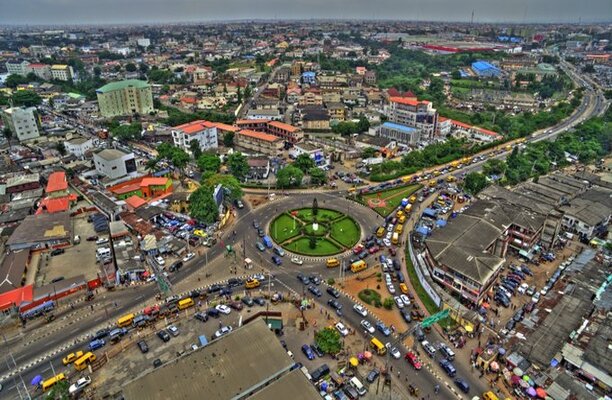
In the quiet arithmetic of business decisions, where spreadsheets weigh cost against return, there exists an intangible variable that refuses to be ignored: prestige. It does not appear in ledgers, yet it shapes them. It cannot be quantified with ease, yet it commands a premium. In Lagos, few places embody this invisible currency more convincingly than Ikeja.
For decades, Ikeja has occupied a peculiar position in the geography of commerce, not merely as the capital of Lagos State, but as a psychological anchor for credibility. In an era where remote work, digital storefronts, and decentralized teams are redefining the meaning of “office,” one might expect the allure of a physical business address to fade. Yet, paradoxically, Ikeja continues to sell status.
The question, then, is not whether Ikeja is expensive. It is why, despite that expense, businesses still choose it.
In business, perception is often the first handshake. Before a proposal is read or a meeting is held, signals are sent subtle, immediate, and decisive. An Ikeja address sends one such signal: stability.
Clients, especially in emerging markets, are conditioned to equate location with legitimacy. A firm headquartered in Ikeja is presumed to be structured, accessible, and serious. It suggests proximity to government institutions, established corporations, and infrastructure that supports continuity. In contrast, a lesser-known or emerging district, no matter how modern or cost-effective, may trigger hesitation.
This is not always rational, but it is deeply human. Trust is rarely built from logic alone; it is often borrowed from symbols. Ikeja, in this sense, has become a symbol.
Beyond clients, location also speaks to employees prospective. For many professionals, especially in Lagos, workplace location influences not just convenience but pride. An Ikeja office carries a certain weight on a résumé. It signals that one is operating within a recognized commercial hub, a place where careers are perceived to grow with greater visibility.
There is also the practical matter of accessibility. Ikeja sits at a nexus of transport routes, making it relatively reachable from various parts of the city. In a metropolis where commuting can erode productivity and morale, this advantage is not trivial. Companies understand this. A strategically located office can be the difference between attracting top-tier talent and settling for less.
Thus, the Ikeja address becomes more than a line on a letterhead, it becomes a recruitment tool.
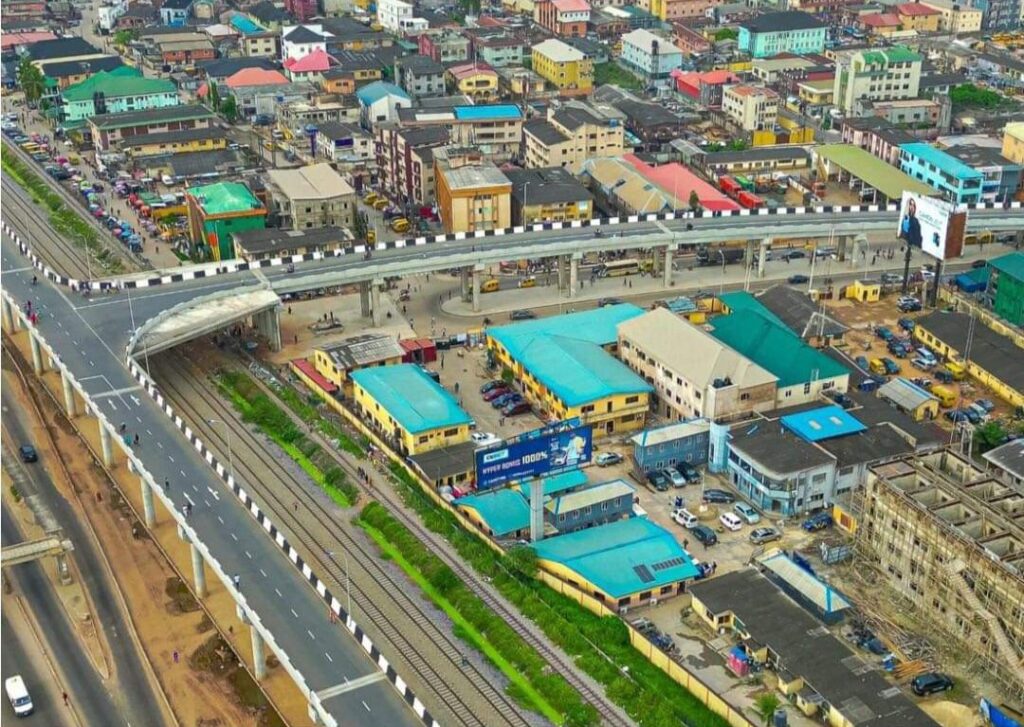
Brands, like individuals, are shaped by their associations. Where you are located subtly influences who you are perceived to be. Ikeja’s long-standing reputation as a business district lends credibility by default. It is a neighborhood that has hosted banks, media houses, corporate headquarters, and government agencies. To situate a business there is to tap into an existing narrative of seriousness and enterprise.
For startups and growing firms, this association can be invaluable. It compresses the time required to build trust. Instead of starting from zero, the brand inherits a portion of Ikeja’s established identity.
Yet, one must ask: will this continue indefinitely? As digital transformation deepens and remote work becomes normalized, the grip of physical location may loosen. Virtual offices, co-working spaces, and decentralized teams are already challenging traditional notions of presence.
Still, prestige has a way of adapting rather than disappearing. Even in a digital age, signals of credibility will persist, they may simply evolve. For now, Ikeja remains one of those signals, rooted in history, reinforced by perception, and sustained by the collective choices of businesses that continue to believe in its value.
In the end, the story of Ikeja is not merely about geography. It is about belief, the shared understanding that where you are says something about who you are. Whether that belief is justified or exaggerated is almost beside the point. What matters is that it exists, and as long as it does, Ikeja will continue to sell more than office space.
It will sell status.
Recommended posts:
 Ikeja, The Beating Heart of Lagos’ Business Landscape: Why Companies Flock in and Why Some Move Out
 Digital Health in Lagos: Is Ikeja’s SHIP Pilot the Start of a Data Revolution?
 How to Start a Business in Ikeja: Permits, Costs and the Best Locations
 VAT Revenue Reaches ₦1 Trillion in Nigeria: What It Means for Ikeja’s Economy