By Bababunmi Agbebi
Edited By Ezennia Uche
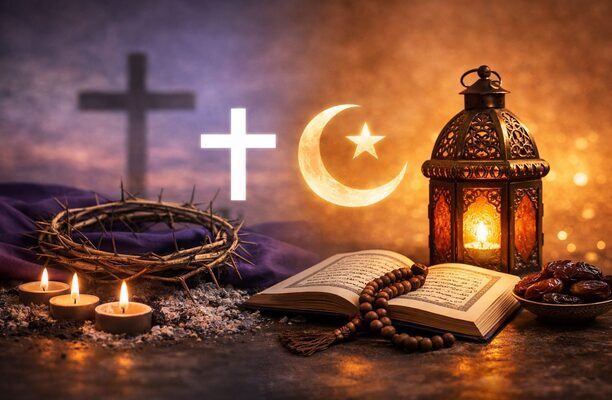
In 2026, two of the world’s most sacred religious observances, Ramadan and Lent will overlap significantly, creating a rare and powerful spiritual moment. For Nigeria, a nation deeply shaped by both Islam and Christianity, this convergence is more than a calendar coincidence. It is a profound opportunity for reflection, unity, and national renewal.
Nigeria is home to one of the largest Muslim and Christian populations in Africa. Periods of religious devotion often shape the rhythm of national life, socially, economically, and politically. When Ramadan and Lent run concurrently, the shared atmosphere of prayer, fasting, repentance, and charity presents a unique window for interfaith harmony and collective introspection.
Ramadan, the ninth month of the Islamic lunar calendar, is observed by Muslims worldwide as a time of fasting from dawn to sunset, intensified prayer, charity, and self-discipline. It commemorates the revelation of the Qur’an to the Prophet Muhammad and emphasizes spiritual purification and empathy for the less privileged.
Lent, observed by many Christians, including Catholics, Anglicans, Seraphs and various Protestant denominations is a 40-day period of fasting, prayer, and repentance leading to Easter. It reflects the 40 days Jesus Christ spent fasting in the wilderness and calls believers to spiritual renewal and sacrifice.
Although rooted in different theological traditions, both seasons emphasize similar core values: self-denial, compassion, humility, generosity, and reconciliation with God and humanity.
In a country often portrayed through the lens of religious differences, the simultaneous observance of Ramadan and Lent in 2026 highlights a powerful truth.
This overlap offers an opportunity to shift the national narrative from division to shared purpose.
Lessons for Nigeria
1. Unity Beyond Difference
Nigeria’s history has been marked by episodes of religious tension. However, the convergence of these sacred periods demonstrates that faith can be a bridge rather than a barrier. When families, colleagues, neighbors, and leaders are all engaged in spiritual discipline at the same time, empathy naturally grows.
This is a chance for religious leaders to organize joint interfaith dialogues, community outreach programs, and peace initiatives. Shared fasting seasons can nurture shared understanding.
2. Leadership Through Sacrifice
Both Ramadan and Lent teach sacrifice, integrity, and accountability. Nigeria’s political and institutional leaders can draw inspiration from these principles. Fasting symbolizes restraint, an essential virtue in public office.
If public officials embraced the spirit of these seasons, self-denial over self-enrichment, service over privilege, the nation could witness meaningful transformation.
3. Renewed Commitment to Social Justice
Charity is central to both observances. Muslims increase zakat (obligatory almsgiving) and sadaqah (voluntary charity) during Ramadan. Christians are called to almsgiving and acts of mercy during Lent.
In a country facing economic hardship, unemployment, and insecurity, coordinated interfaith charity initiatives could make a significant impact. Faith communities can collaborate on feeding programs, medical outreach, and support for internally displaced persons.
4. Healing and Reconciliation
Nigeria’s path to stability requires healing,ethnic, political, and religious. Both sacred seasons emphasize repentance and forgiveness. They remind citizens that reconciliation is not weakness but strength.
Communities affected by conflict can use this period for dialogue and peacebuilding, supported by religious institutions.
5. Personal Responsibility in National Transformation
National change begins with individual transformation. Ramadan and Lent both call believers to examine their hearts, confront personal shortcomings, and choose righteousness.
If millions of Nigerians simultaneously commit to honesty, kindness, and civic responsibility during this period, the ripple effects could extend far beyond the religious calendar.
The overlap of Ramadan and Lent in 2026 is not merely astronomical, it is symbolic. It presents Nigeria with a spiritual alignment that mirrors the country’s religious diversity.
Rather than focusing on differences in doctrine, Nigerians can focus on shared devotion to God, shared concern for the poor, and shared hope for a better nation.
In a time when the country seeks direction, stability, and renewal, this convergence offers a timely reminder: unity is possible, transformation is achievable, and faith when rightly understood can be a powerful force for national cohesion.
If embraced intentionally, 2026 could be remembered not only as the year two sacred seasons met, but as a year Nigerians rediscovered the strength of their shared spiritual heritage.