By Ejiofor Toochi
Edited by Ezennia Uche
The recent closure of Ladipo Market by Lagos State authorities over poor waste management has once again highlighted the persistent challenges of maintaining sanitation in Lagos’ bustling markets.
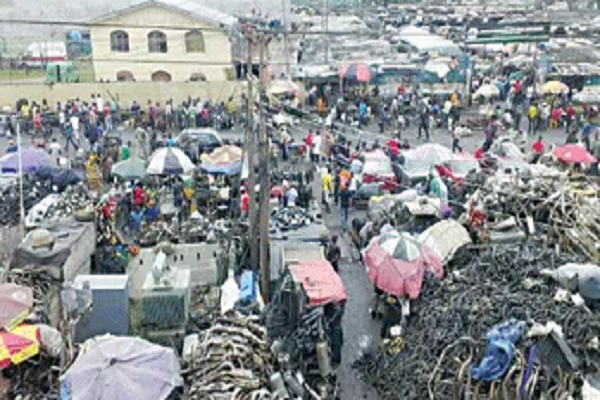
In the early hours of Sunday, the Lagos State government, in collaboration with LAWMA and KAI personnel, sealed Ladipo Spare Parts Market along Murtala Muhammed International Airport Road (Apapa–Oshodi Expressway). Tokuno Wahab, the state’s Commissioner for the Environment and Water Resources, cited repeated environmental infractions, including indiscriminate refuse disposal on the median/highway and illegal street trading, as reasons for the closure.
An executive of Ladipo market, Onyeka Igwe, speaking to The Guardian, criticised the closure, claiming that they were not given any prior warning before the government sealed the market. “We made a lot of changes, and if there is any infraction or anything done differently from what we had discussed, the government should have called our attention and told us where we are not doing well. No formal meeting or call on the market leadership. We will discuss our next line of action,” he said.
A Gale of Closure
This isn’t the first time. In September 2023, Ladipo market was closed down due to reckless waste disposal, unhygienic premises, and non-payment of waste bills, among other issues. It was later reopened in October.
That same year, Oyingbo, Mile 12 International, Alayabiagba and Owode Onirin Markets faced similar closures or warnings over environmental violations, particularly waste disposal.
An article from Businessday read, “For traders in Lagos, these are not the best of times as markets in the state are experiencing what has been described as ‘a gale of closures’ by the government, citing filth and other environmental offences.”
A Bigger Issue
As Lagos continues to grow in population and commercial activity, managing waste in densely packed markets has become a critical challenge. Poor waste disposal not only affects sanitation but also contributes to flooding, disease outbreaks, and environmental degradation.
In many of these cases, authorities enforced temporary shutdowns to compel compliance, only for the same issues to resurface months later. If markets keep getting shut down, why isn’t there a long-term solution?
On social media, the closure has drawn criticism from Lagos residents, many of whom questioned the fairness of sealing the market without addressing systemic waste management failures. Several users argued that authorities had failed to provide adequate waste disposal infrastructure, making compliance difficult for traders.
Trader Ben wrote on X, “Where is the moral justification to seal a market where the govt hasn’t provided proper waste disposal tools for the men and women of the said market?”
Others pointed out that LAWMA’s refuse collection had been irregular for months, leaving waste to pile up, while some questioned whether repeated closures ever lead to lasting behavioural change.
Call for Long-term Solutions
A recurring concern among commenters was the absence of long-term solutions. While acknowledging the need for cleaner markets, many argued that enforcement without consistent waste evacuation and sufficient disposal points only leads to temporary improvements that quickly fade once markets reopen.
The repeated shutdown of markets has renewed calls for a more sustainable approach to waste management in Lagos. Long-term solutions must go beyond enforcement and focus on building systems that work within the realities of these markets. This includes practical measures such as clearly designated waste collection points, regular and affordable refuse evacuation, and stronger collaboration between LAWMA and market associations.
There’s also the need for continuous environmental education for traders, noting that without consistent engagement and practical support, market closures only provide temporary relief.
With Ladipo Market still sealed, the question remains: Will this lead to lasting change, or will it become another chapter in Lagos’ ongoing struggle with waste management?