By Bababunmi Agbebi
Edited by Ezennia Uche
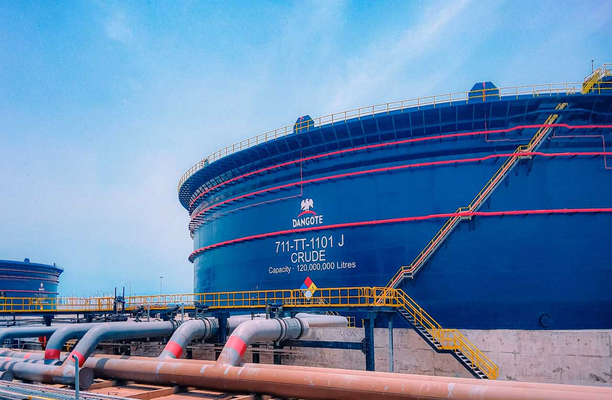
Dangote Petroleum Refinery & Petrochemicals has announced a reduction in the gantry price of Premium Motor Spirit (PMS) popularly known as petrol cutting the ex-depot rate by ₦25 per litre from ₦799 to ₦774 with immediate effect. The move, communicated to petroleum marketers reflects evolving domestic market dynamics and the company’s strategy to strengthen the competitiveness of locally refined fuel in Nigeria’s deregulated downstream sector.
Alongside the price change, the refinery also announced the end of its PMS lifting incentive, a bonus programme that had encouraged volume offtake by marketers. Dangote confirmed that credits for qualifying volumes loaded during the incentive period will be reflected in marketers’ account statements.
The petrol price adjustment comes within a broader backdrop of fluctuating fuel costs following the complete deregulation of Nigeria’s downstream petroleum sector and the removal of fuel subsidies in 2025. Throughout last year, ex-depot petrol prices experienced significant volatility, largely influenced by movements in the foreign exchange market, shifts in global crude oil prices, and continued reliance on imported fuel. During that period, ex-depot rates swung between roughly ₦700 and above ₦800 per litre, with retail pump prices climbing even higher in some regions across the country.
The entry of large-scale domestic supply from the Dangote Refinery, Africa’s largest single-train refinery with a capacity of 650,000 barrels per day toward the end of 2025 played a key role in moderating pricing pressures, especially along coastal and southern distribution corridors, by reducing dependence on imported petrol benchmarks.
While the immediate impacts of the reduction are reflected at the ex-depot level, how this adjustment will translate into retail pump prices remains subject to distribution, logistics, and individual marketer pricing decisions. Still, the move is widely viewed as a positive step toward cushioning Nigerian consumers from high fuel costs and stabilising the downstream petroleum market amid ongoing structural transitions.
As domestically refined petrol continues to gain traction, Dangote Petroleum Refinery’s pricing policy is expected to play an increasingly important role in shaping national fuel price benchmarks and reducing the cost of fuel imports, a priority for Nigeria’s broader economic resilience and foreign exchange conservation strategies.