
By Bababunmi Agbebi
There is a difference between restoring a national monument and pricing the citizens out of it.
That distinction matters now more than ever as conversations around the newly renovated National Theatre in Lagos grow louder, not because Nigerians are not impressed by the facelift, but because of the reported cost of renting some of its halls, with figures said to run as high as ₦40 million depending on the space. For a country where inflation has eaten deep into household incomes, where the creative industry is still fighting for structure and support, and where public cultural infrastructure is painfully scarce, such pricing does not feel aspirational. It feels alienating.
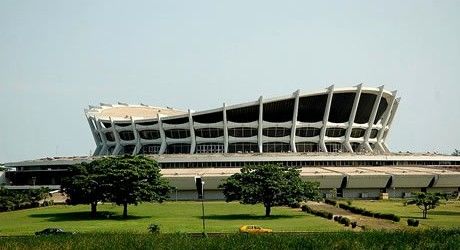
Let us be clear: the renovation of the National Theatre is a beautiful thing. For years, the iconic edifice sat like a fading memory of what Nigeria once believed culture could be, grand, central, unifying. The restoration of the space by the Bankers’ Committee, after years of neglect, deserves commendation. The work done on the complex, from the main bowl to the banquet hall and cinema spaces, has rightly been described as part of a wider effort to reposition the National Theatre as a creative and entertainment hub.
But here is the problem: a national monument must not be renovated only to become inaccessible to the very people whose history and creativity it represents.
The National Theatre is not just another event centre in Lagos. It is not a private waterfront property in the middle of a luxury district. It is not a vanity project built solely for elite weddings, corporate galas and high-end social events. It is a public cultural institution. It is government property. It is a national symbol. And its rates should reflect that reality.
If the figures being discussed are accurate, then the pricing philosophy behind the new National Theatre is deeply disappointing.
Because what exactly is the vision here?
Is the goal to create a cultural home for Nigerian art, theatre, film, music, exhibitions and public events? Or is it to create another polished, premium venue where only those with deep pockets can afford to gather under expensive chandeliers while the average creative stands outside admiring the architecture from Instagram?
This is where the Bankers’ Committee and everyone involved in the commercial management of the facility must exercise a higher level of reason.
No one is arguing that the National Theatre should be run at a loss. Maintenance costs money. World-class facilities require world-class upkeep. Staffing, security, utilities, programming and preservation all come with serious financial implications. Profitability and sustainability are valid considerations. But there is a line between running a public asset responsibly and pricing it as though it were built to serve only the top one percent.
A reported ₦40 million hall rental in today’s Nigeria is not just expensive, it is disconnected.
Disconnected from the realities of artists trying to stage productions.
Disconnected from cultural organisations hoping to host festivals and exhibitions.
Disconnected from educational institutions, independent producers and young creatives who should see the National Theatre as a home, not as a fortress with a luxury price tag.
And, perhaps most importantly, disconnected from the standard of living of the average Nigerian.
That is the heart of the matter.
A country battling weak purchasing power, rising food costs, transport pressure and an unstable economy cannot pretend that pricing a national cultural monument like a premium private venue is normal. It is not enough to unveil a beautiful building if the people who need it most can no longer use it. A renovated theatre that is financially out of reach may still be aesthetically pleasing, but it will fail the test of public value.
And if care is not taken, that failure will show itself in the most painful way possible: underuse.
Because buildings do not become cultural landmarks simply because they are renovated. They become relevant because they are alive with plays, concerts, festivals, exhibitions, school events, creative showcases, conversations and public participation. They become meaningful when they are constantly occupied by the pulse of a people.
Price them beyond reason, and what you risk creating is not a thriving national hub but a glorified monument to exclusion, stunning to look at, difficult to use, and eventually vulnerable to abandonment in spirit even if not in structure.
That would be tragic.
The National Theatre should not become one of those Nigerian projects we praise during commissioning and quietly avoid afterwards because the economics make no sense. It should not become another symbol of how this country often builds for applause but forgets to build for access.
The solution, however, is not complicated.
There must be a pricing framework that reflects the Theatre’s dual identity as both a premium facility and a public cultural institution. That means tiered pricing. It means subsidised rates for stage plays, school productions, literary events, cultural festivals and independent creative projects. It means commercial rates for high-end private events and corporate functions, while preserving affordability for artistic and national programming. It means a model that understands that not every booking should be treated the same way.
A luxury wedding and a youth theatre festival should not be paying from the same philosophical template.
A multinational product launch and a dance company trying to stage a performance should not be competing on equal commercial terms for a public cultural venue.
If the National Theatre is to serve Nigeria properly, then its management must recognise that access is not charity. It is part of the mandate.
This is why the Federal Government, the Ministry of Art, Culture, Tourism and the Creative Economy, and the Bankers’ Committee must pay attention to the public mood. Nigerians are not protesting excellence. They are questioning exclusion. They are not asking that standards be lowered. They are asking that reason be applied. And that is a fair demand.
The newly renovated National Theatre should be a place where the country’s cultural dreams can stand tall again, not a place where those dreams are priced out before they even reach the stage.
There is no glory in restoring a monument only to make it inaccessible.
There is no national pride in preserving a symbol while excluding the nation from it.
And there is certainly no cultural renaissance in a theatre that only the rich can afford to rent.
The National Theatre belongs first to Nigeria, not to pricing templates that ignore Nigerian realities.
That truth should guide every decision made from this point forward.