By Bababunmi Agbebi
Edited by Ezennia Uche
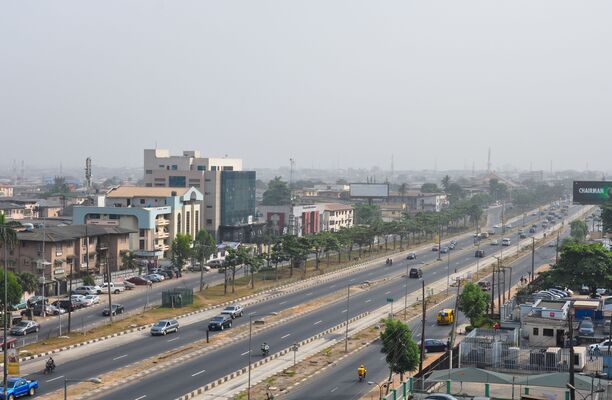
Every day in Ikeja, traffic pulses like a living organism. Danfos jostle for space. Office workers hurry past yellow buses. Street vendors call out above the hum of engines. Overhead, street signs flash familiar names: Obafemi Awolowo Way. Mobolaji Bank Anthony Way. Toyin Street. Allen Avenue.
Thousands pass beneath these names daily.
Few stop to ask: Who were they?
Take Obafemi Awolowo. Today, his name stretches across one of Ikeja’s busiest arteries, a corridor of banks, corporate headquarters, and government buildings. But Awolowo was more than a road marker. He was one of Nigeria’s foremost nationalists, a premier of the old Western Region, and the architect of free primary education in the 1950s. His policies reshaped access to learning and laid foundations that still influence Nigeria’s educational system.
To drive along Obafemi Awolowo Way is to travel a route named for a man who believed deeply in intellectual empowerment. Yet the commuters speeding past rarely consider that legacy.
Then there is Sir Mobolaji Bank Anthony, The Businessman Behind the Name. Drive along Mobolaji Bank Anthony Way, and you’re on one of Ikeja’s most vital traffic arteries, a road teeming with commuters, billboards, and the hum of commerce. But the name wasn’t plucked at random.
The street honours Sir Mobolaji Bank Anthony (1907–1991), a forerunner of Nigeria’s commercial class whose business acumen and civic contributions made him an influential figure in mid-20th century Lagos. As a wealthy entrepreneur and philanthropist, Bank Anthony chaired several companies and donated generously to social infrastructure, including health facilities such as the Ayinke House at Ikeja General Hospital. In naming the road after him, city planners etched his legacy into the very pattern of Ikeja’s growth, a tribute to enterprise and public service.
And what of Toyin Street? Unlike the grand political figures, Toyin represents a quieter story, widely believed to reference a member of the Adeniyi-Jones family, prominent in Lagos’ early professional class. The street itself mirrors that layered identity: modest yet influential, bustling yet intimate.
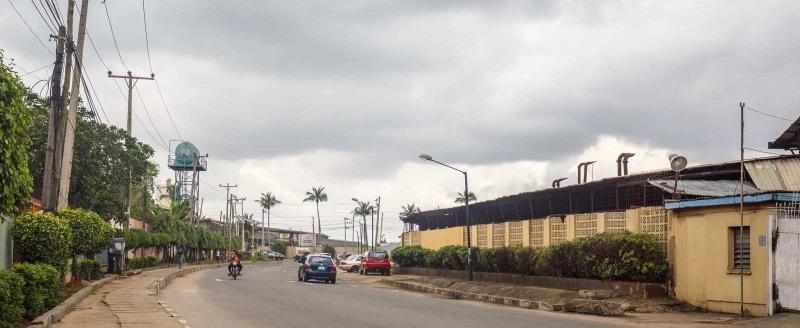
Adeniyi Jones Street cuts through a bustling part of Ikeja’s residential and commercial zones. The name reflects another pioneering personality: Dr. Curtis Crispin Adeniyi-Jones (1876–1957).
A decorated medical doctor of Saro heritage, Adeniyi-Jones was also a respected politician and financier. He co-founded the Nigerian National Democratic Party (NNDP) in the early 20th century and served in Nigeria’s Legislative Council, representing Lagosians for over a decade. His influence extended beyond the clinic into public policy and economic development, making him a prominent voice in the push for greater Nigerian participation in colonial governance.
Street names are not random. They are decisions, deliberate acts of remembrance. They turn geography into biography.
In Ikeja, the capital of Lagos State, asphalt doubles as archive. These roads commemorate visionaries, administrators, entrepreneurs, and community builders whose fingerprints remain on Nigeria’s development. Yet, as glass-fronted buildings replace bungalows and tech startups rise beside old printing presses, the connection between name and narrative grows faint.
These names on the road signs serve as anchors to an earlier chapter, reminders that modern Lagos did not emerge by accident.
They also challenge us. Who do we choose to memorialize? Which contributions earn permanence in steel and paint? And decades from now, whose names will future generations hurry past without knowing?
“Names on the Asphalt” is not just about history. It is about awareness.
The next time traffic slows on Obafemi Awolowo Way or a turn is missed on Mobolaji Bank Anthony Way, consider the lives stitched into those syllables. Consider the policies debated, the risks taken, the institutions built. Consider the Nigeria they imagined.
Cities speak, not only through monuments and museums, but through mundane markers we overlook daily.
In Ikeja, history is not hidden in archives.
It is written on the road
Recommended posts:
 LASG to divert traffic at Oduduwa Way, Oduduwa Crescent in Ikeja for construction.
 Lagos State Government maps out Traffic Diversion plans as road construction kicks off in Ikeja area. …construction works to last for over eight months.
 Primary Health Care Centers – Lifesavers Within Communities
 Ikeja: Before the Flyovers