By Bababunmi Agbebi
Edited by Ezennia Uche
The Lagos State House of Assembly has ordered an immediate halt to the controversial demolition exercise in the Makoko waterfront and adjoining communities, a decision that comes amid rising tensions between residents, rights groups, and government authorities.
The resolution, announced by the Chairman of an ad-hoc committee, Hon. Noheem Adams, directs all ministries, departments, and agencies involved in the demolition activities in Makoko, Oko-Agbon, and Shogunro to suspend further clearance work “until further notice.” The Assembly also pledged that residents whose properties have already been demolished will be compensated.
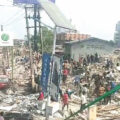
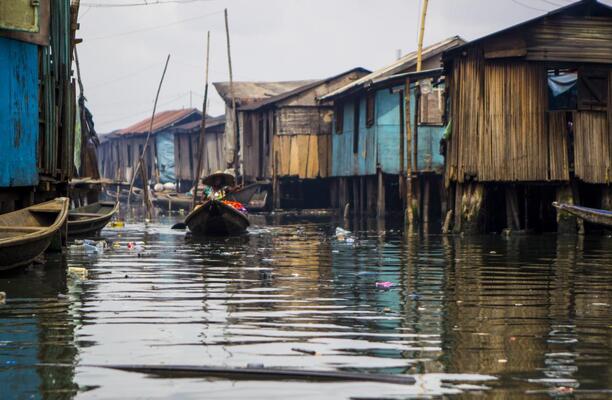
Demolition operations began in late December 2025, targeting structures along the Makoko waterfront, a historic settlement built on stilts over Lagos Lagoon. Local authorities described the exercise as necessary for safety, noting that some buildings were constructed under high-tension power lines and posed risks to residents and critical infrastructure.
However, residents, human rights organisations, and lawyers criticised the approach, citing inadequate notice, lack of meaningful consultation, and insufficient resettlement plans. Protests erupted last week at the Assembly complex in Alausa, Ikeja, with hundreds of displaced Makoko residents demanding an end to the demolitions and fair treatment. Some demonstrations turned tense, and several activists were reportedly detained.
In response to growing public disquiet, the Lagos State House of Assembly convened a stakeholders’ meeting where lawmakers heard from community leaders and residents. Following deliberations, the Assembly emphasised the need for clear communication, community involvement in any task force constituted to handle the situation, and humane treatment of affected persons.
Meanwhile, State government officials have maintained that the demolition is part of broader efforts to modernise the waterfront area and improve safety. Authorities have referenced ongoing plans for the regeneration of Makoko, including an ambitious waterfront development project with an estimated multi-million-dollar budget.
Governor Babajide Sanwo-Olu’s administration has also pledged compensation to displaced residents and indicated that infrastructure improvements are essential to protect lives and property.
Despite the Assembly’s intervention, many residents continue to face uncertainty. Displaced families are still seeking clarity on compensation timelines, resettlement plans, and long-term solutions to safeguard their livelihoods. Rights groups have stressed the importance of adhering to due process and involving independent oversight to prevent further hardship.
The Assembly’s directive pauses demolition activities, creating space for dialogue and review. Whether this leads to a more sustainable and equitable approach to urban development in Makoko remains a subject of active discussion among stakeholders.