By Ejiofor Toochi
Edited by Ezennia Uche
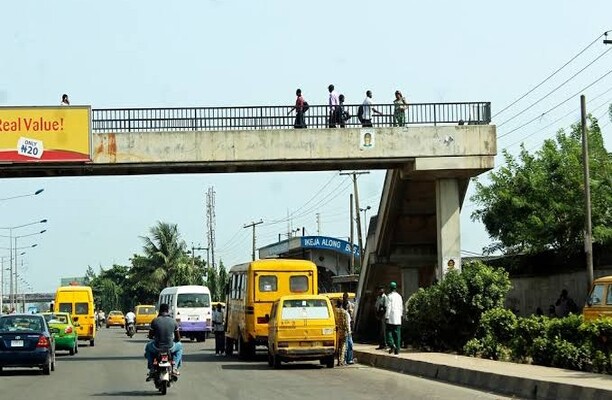
For years, the stretch of road from Ikeja Along to Ile Zik has maintained a reputation for being unsafe for motorists and commuters. What should be one of the busiest connectors on the Lagos–Abeokuta Expressway has instead become a location where robberies are so common that many avoid it after dusk.
A bus driver who uses the route regularly told IkejaBird that vehicles that break down at night are often targeted almost immediately. “Ile Zik is not safe. Too many robberies. Sometimes, your vehicle breaks down and suddenly area boys gather, pull everyone out and rob them.” He noted that the repeated destruction of streetlights along the road makes the area darker and easier for criminals to operate.
The insecurity associated with Ile Zik is not limited to recent experiences. Media reports show this has been an ongoing concern for almost a decade. In 2017, The Cable reported how two alleged kidnappers were set ablaze by an angry crowd at Ile Zik after residents claimed they had uncovered tunnel outlets and facilities allegedly used by the kidnappers.
Diamond Ajoke, who has lived near the route for years, recalled tales of a suspected ritualist and kidnapping rumours in the area. “There’s a woman called ‘Iya Ibadan.’ In the daytime,she dresses like a mad person and at midnight, a normal person. She’s the one dragging people and taking them to the kidnappers. I came there, and I saw a lot of human parts.”
However, she noted the threat today is more about robbery. “There’s no more news of ritual or kidnapping, but they’re doing robbery there now,” Ajoke told IkejaBird. She also alleged that even when police are alerted to robberies, they sometimes do not intervene without a direct call from victims. “Even if the police see people being robbed, they’ll not make any attempt. They’ll say ‘they didn’t call us so we don’t want to interfere,’ and it’s not done anywhere.”
Another trader in the area echoed similar concerns, linking safety directly to lighting conditions. “During the daytime, there’s no problem, there’s full security, but from 10, 11 pm, this place isn’t okay due to the streetlight they removed.”
More recently, the dangers along the route resurfaced on social media when a man identified as Sobo Benjamin shared how his friend boarded a bus at Ikeja Along and ended up a victim of a one-chance robbery at Ile Zik. His post, shared on Instagram and TikTok, attracted dozens of comments from Lagos residents recounting similar experiences and urging the government and police to intervene.
Most of these robberies can be traced to inadequate street lighting. In February 2025, IkejaBird reported how many areas in Ikeja without functioning streetlights create dark pockets that embolden criminals and reduce the likelihood of detection, particularly at night.
In response to growing insecurity linked to poor lighting, the Lagos State Government has been embarking on a major rollout of solar-powered streetlights across the metropolis. The initiative, part of the broader Light-Up Lagos Project, aims to replace traditional grid-dependent lighting with smart solar units that can improve visibility, cut energy costs, and ultimately deter crime.
For commuters along the Ikeja–Ile Zik axis, functioning streetlights could mark a turning point. Improved lighting may not erase crime entirely, but it remains a critical first step toward reversing the long history of insecurity associated with Ile Zik.