By Bababunmi Agbebi
Edited by Ezennia Uche
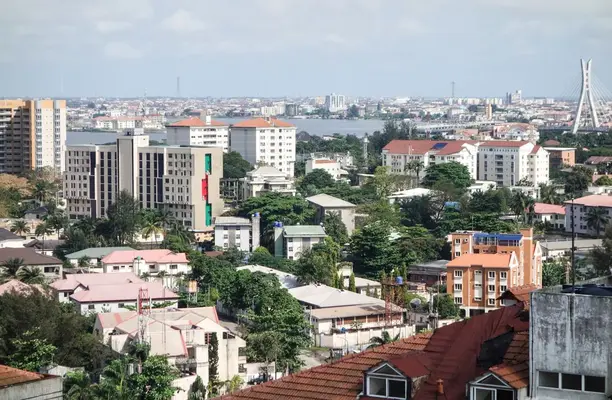
When the Lagos State House of Assembly approved a record ₦4.44 trillion budget for the 2026 fiscal year, it did more than pass another appropriation bill, it signaled a defining moment in the governance of Nigeria’s most populous and economically strategic state.
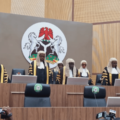
The budget, formally titled the “Budget of Shared Prosperity,” was passed unanimously during plenary under the leadership of Speaker Rt. Hon. Mudashiru Obasa, following the presentation of the Budget Committee’s report by its Chairman, Hon. Lukman Olumoh. The size, structure, and intent of the budget reflect both the immense pressures facing Lagos and the ambition to translate economic growth into tangible improvements in the daily lives of its residents.
At ₦4,444,509,776,438, the 2026 budget is one of the largest ever passed by any subnational government in Africa. Of this amount, ₦2.337 trillion (about 53 percent) is allocated to capital expenditure, while ₦2.106 trillion is set aside for recurrent spending.
This near-even balance is significant. For years, Lagos has struggled as many governments do to reconcile the cost of running a massive public service with the need to invest aggressively in infrastructure. The 2026 budget suggests a deliberate attempt to do both: keep government functional while accelerating development.
For Lagos residents, this balance matters. Capital expenditure determines how quickly roads are built, hospitals upgraded, schools expanded, drainage systems improved, and transport networks modernized. Recurrent spending, on the other hand, ensures that teachers, health workers, civil servants, and emergency responders are paid on time and adequately supported.
According to Hon. Lukman Olumoh, the budget is anchored on four pillars: poverty eradication, human-centred development, stronger infrastructure, and effective governance. These themes are not abstract policy slogans; they address the lived realities of millions of Lagosians.
- Poverty eradication speaks to the widening gap between opportunity and survival in a city where rising costs have pushed many households to the edge.
- Human-centred development places education, healthcare, and social services at the core of governance, critical in a state with a youthful and rapidly growing population.
- Stronger infrastructure addresses one of Lagos’ most persistent challenges: congestion, flooding, housing deficits, and overstretched public utilities.
- Effective governance underscores the need for transparency, fiscal discipline, and service delivery in a complex megacity economy.
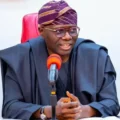
Governor Babajide Sanwo-Olu, who presented an initial ₦4.237 trillion spending plan to the House on November 25, 2025, described the budget as a tool to accelerate economic growth, deepen infrastructure development, and maintain fiscal responsibility.
The Assembly’s upward adjustment of the budget signals legislative confidence in the state’s revenue prospects and development priorities. It also reinforces a shared executive-legislative vision at a time when political gridlock often slows governance elsewhere.
Why This Budget Matters to Lagosians
For the average Lagos resident, whether a trader in Mile 12, a civil servant in Alausa, a tech entrepreneur in Yaba, or a commuter navigating daily traffic the significance of the 2026 budget will be measured not in trillions but in outcomes.
Will roads be completed faster?
Will public transport become safer and more reliable?
Will schools and hospitals receive the investment they urgently need?
Will economic growth translate into jobs and reduced hardship?
The Budget of Shared Prosperity raises expectations that growth will not remain concentrated among a few but will be deliberately extended across communities.
Ultimately, the passage of the budget is only the beginning. Its true success will depend on implementation, transparency, and accountability. Lagos residents will be watching closely not just how much is spent, but how well it is spent.
As Africa’s largest city continues to expand, the 2026 budget stands as both an opportunity and a test: an opportunity to reshape urban life for millions, and a test of government’s ability to turn bold fiscal plans into shared prosperity.
If effectively executed, this budget could mark a turning point in Lagos’ journey toward inclusive growth. If not, it risks becoming another impressive document whose promise falls short on the streets it was meant to transform.
For Lagos, the stakes could not be higher.